

The digestive systemSpec 4.2.2.1
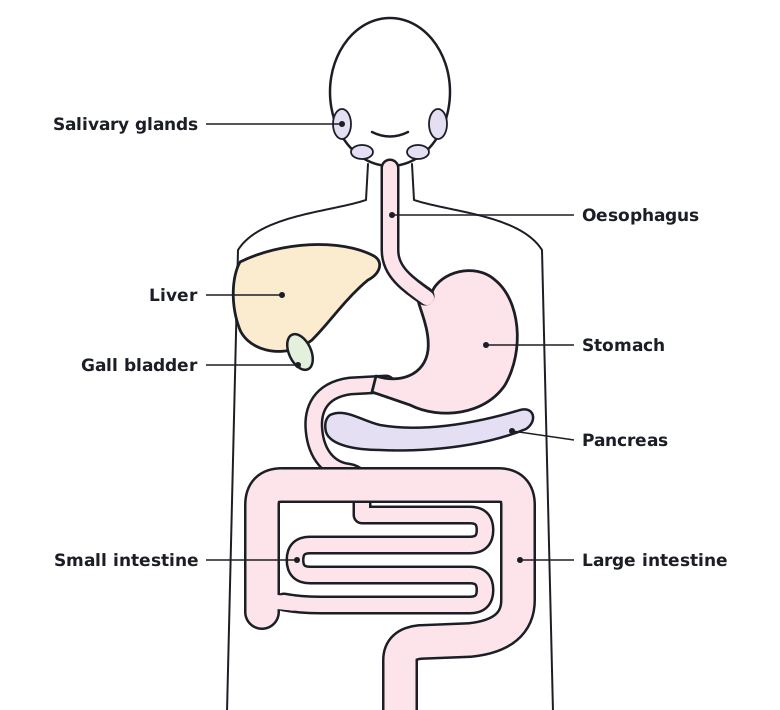
The digestive system is an example of an organ system in which several organs work together to digest and absorb food.
Food contains large molecules of carbohydrate, protein and lipid. These are too big to pass into the blood. Digestive enzymes convert food into small soluble molecules that can be absorbed into the bloodstream.
| Organ | Role |
|---|---|
| Salivary glands | Make amylase, which mixes with food in the mouth |
| Stomach | Churns food. Makes protease and hydrochloric acid |
| Liver | Makes bile |
| Gall bladder | Stores bile |
| Pancreas | Makes amylase, protease and lipase, and releases them into the small intestine |
| Small intestine | Makes amylase, protease and lipase. Digestion is finished here and the small soluble molecules are absorbed into the blood |
 Tap to enlarge