

Reflex actions and the reflex arcSpec 4.5.2.1
Reflex actions are automatic and rapid. They do not involve the conscious part of the brain. Reflexes are important because they protect the body from harm, for example pulling your hand away from a hot object before you have time to think.
- A receptor detects the stimulus and an impulse starts in the sensory neurone.
- The sensory neurone carries the impulse to the CNS.
- At a synapse, chemicals diffuse across the gap and start an impulse in the relay neurone.
- The relay neurone passes the impulse on, through another synapse, to the motor neurone.
- The motor neurone carries the impulse to the effector.
- The effector (a muscle or gland) produces the response.
| Structure | Function |
|---|---|
| Receptor | Detects the stimulus |
| Sensory neurone | Carries impulses from the receptor to the CNS |
| Relay neurone | Carries impulses within the CNS, from the sensory neurone to the motor neurone |
| Synapse | A gap between two neurones. A chemical diffuses across the gap and starts an impulse in the next neurone |
| Motor neurone | Carries impulses from the CNS to the effector |
| Effector | A muscle (contracts) or a gland (secretes) that produces the response |
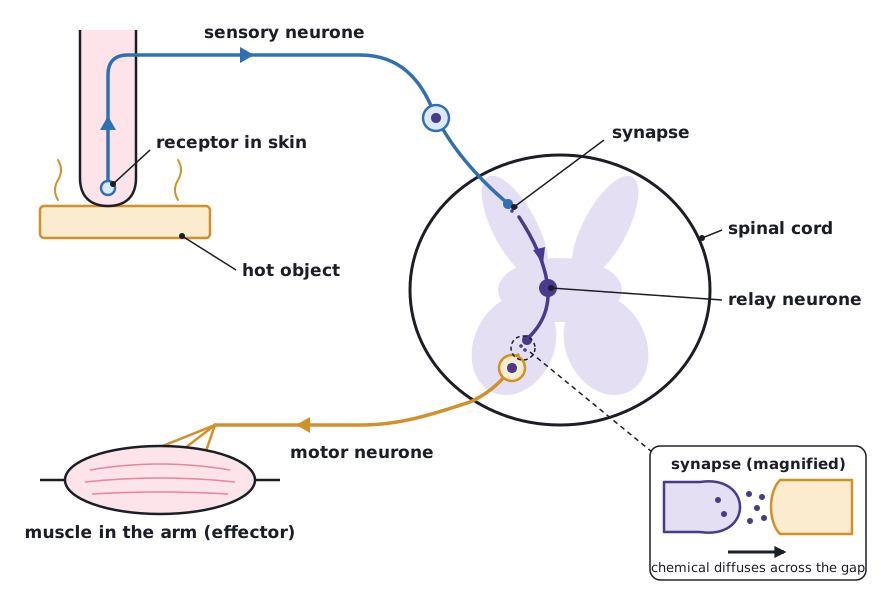 Tap to enlarge