

The eye: structures and their functionsSpec 4.5.2.3
The eye is a sense organ containing receptors sensitive to light intensity and colour.
| Structure | How its structure relates to its function |
|---|---|
| Retina | Contains the light receptors. It is where the image is focused and it detects light intensity and colour |
| Optic nerve | Carries impulses from the receptors in the retina to the brain |
| Sclera | The tough white outer layer. It protects the eye and keeps its shape |
| Cornea | Transparent front surface. It lets light in and refracts (bends) the light rays |
| Iris | Muscles that control the size of the pupil and so how much light enters the eye |
| Ciliary muscles | A ring of muscle around the lens that contracts or relaxes to change the lens shape |
| Suspensory ligaments | Hold the lens in place and connect it to the ciliary muscles. Their tension changes the lens shape |
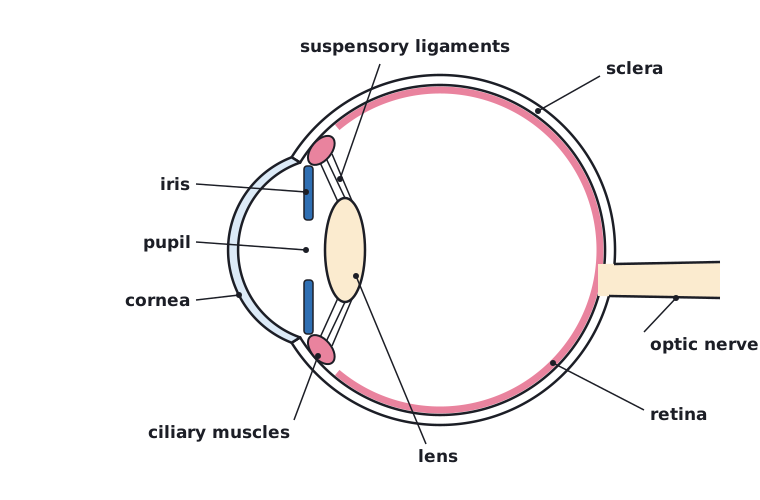 Tap to enlarge
Adaptation to dim light
The iris controls how much light reaches the retina. In dim light the pupil gets wider so more light enters. In bright light the pupil gets narrower so less light enters, which protects the retina.