

MeiosisSpec 4.6.1.2
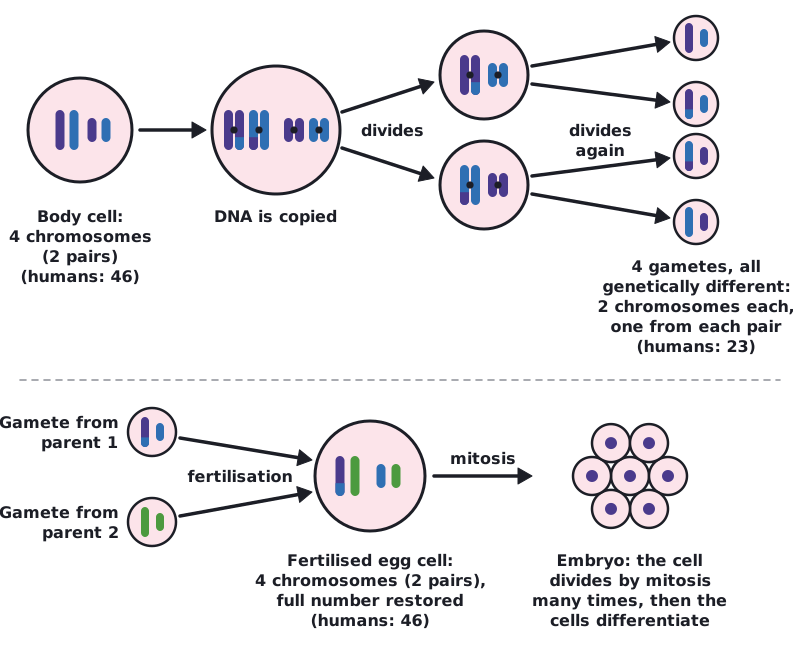
Cells in the reproductive organs divide by meiosis to form gametes. You need to be able to explain how meiosis halves the number of chromosomes in gametes and how fertilisation restores the full number.
- The cell copies its genetic information.
- The cell divides twice to form four gametes.
- Each gamete has a single set of chromosomes, so the chromosome number is halved.
- All the gametes are genetically different from each other.
Human body cells contain 23 pairs of chromosomes (46 in total). Each human gamete therefore has 23 chromosomes, one from each pair.
Gametes join at fertilisation to restore the normal number of chromosomes. The new cell divides by mitosis, so the number of cells increases. As the embryo develops, the cells differentiate.
 Tap to enlarge