

ADH and water levelSpec 4.5.3.3
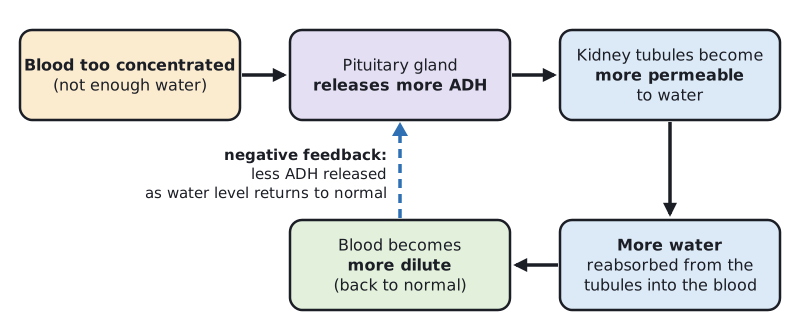
The water level in the body is controlled by the hormone ADH, which acts on the kidney tubules. ADH is released by the pituitary gland when the blood is too concentrated. It causes more water to be reabsorbed back into the blood from the kidney tubules. It does this by making the kidney tubules more permeable to water.
| Blood too concentrated (not enough water) | Blood too dilute (too much water) | |
|---|---|---|
| ADH released by pituitary | More | Less |
| Permeability of kidney tubules to water | Increases | Decreases |
| Water reabsorbed into the blood | More | Less |
| Urine | Small volume, concentrated | Large volume, dilute |
This is controlled by negative feedback: when the water level returns to normal, less ADH is released.
 Tap to enlarge