

Kidney failure: dialysis and transplantSpec 4.5.3.3
People who suffer from kidney failure may be treated by organ transplant or by using kidney dialysis.
How dialysis works
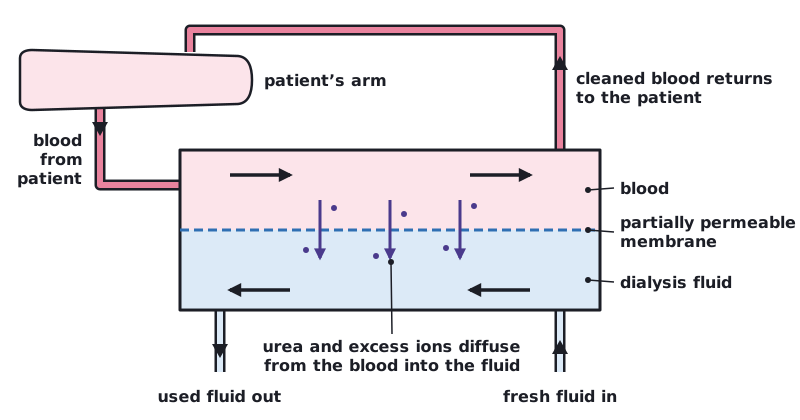
- Blood from the patient flows into a dialysis machine.
- The blood flows next to a partially permeable membrane. On the other side is dialysis fluid.
- Urea and excess ions diffuse from the blood into the dialysis fluid. Glucose and other useful substances stay in the blood, because the dialysis fluid contains these at the same concentration as normal blood.
- The cleaned blood returns to the patient.
 Tap to enlarge
| Dialysis | Kidney transplant | |
|---|---|---|
| Advantages | No need to wait for a donor; no risk of rejection | A long-term treatment; the patient is free from regular dialysis sessions and diet is less restricted |
| Disadvantages | Must be repeated regularly and takes several hours each time; diet and fluid intake must be controlled; expensive over a long time | Donor kidneys are in short supply; the body may reject the new kidney, so the patient must take drugs to prevent rejection; surgery has risks |