

Aerobic and anaerobic respirationSpec 4.4.2.1
Cellular respiration is an exothermic reaction which is continuously occurring in living cells. In an exothermic reaction, energy is transferred to the surroundings. The energy transferred supplies all the energy needed for living processes.
Organisms need energy for:
- chemical reactions to build larger molecules
- movement
- keeping warm.
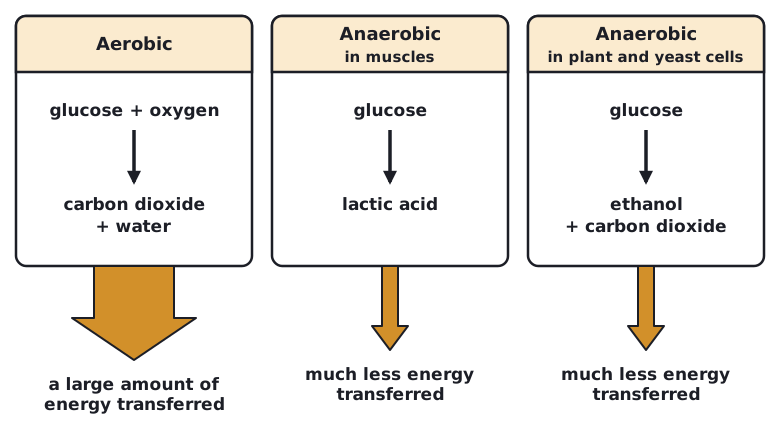
Respiration in cells can take place aerobically (using oxygen) or anaerobically (without oxygen), to transfer energy.
Aerobic respiration
glucose + oxygen → carbon dioxide + water
C₆H₁₂O₆ + 6O₂ → 6CO₂ + 6H₂O
Anaerobic respiration in muscles
glucose → lactic acid
As the oxidation of glucose is incomplete in anaerobic respiration, much less energy is transferred than in aerobic respiration.
Anaerobic respiration in plant and yeast cells
glucose → ethanol + carbon dioxide
Anaerobic respiration in yeast cells is called fermentation. It has economic importance in the manufacture of bread and alcoholic drinks.
| Aerobic | Anaerobic (muscles) | Anaerobic (plant and yeast cells) | |
|---|---|---|---|
| Oxygen needed? | Yes | No | No |
| Products | Carbon dioxide and water | Lactic acid | Ethanol and carbon dioxide |
| Energy transferred | A large amount, as glucose is completely oxidised | Much less, as glucose is only partly oxidised | Much less, as glucose is only partly oxidised |
 Tap to enlarge