

Producing monoclonal antibodiesSpec 4.3.2.1
Monoclonal antibodies are produced from a single clone of cells. The antibodies are specific to one binding site on one protein antigen, so they are able to target a specific chemical or specific cells in the body.
An antigen is a molecule that an antibody can bind to. Lymphocytes are a type of white blood cell that make antibodies.
Making monoclonal antibodies
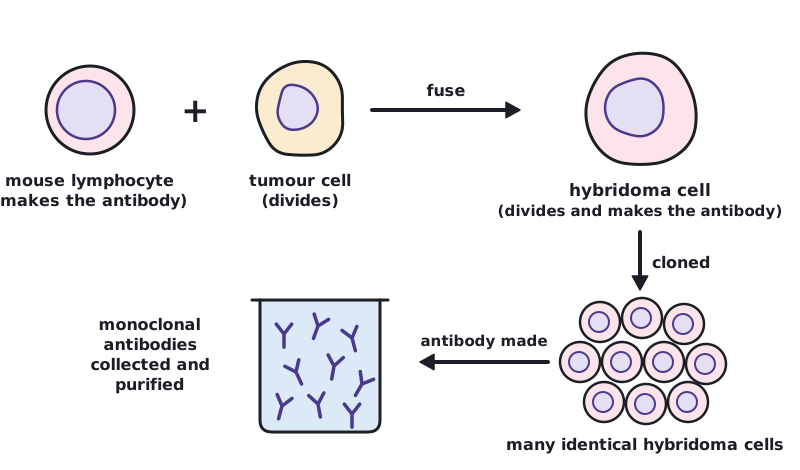
- Mouse lymphocytes are stimulated to make a particular antibody.
- The lymphocytes are combined with a particular kind of tumour cell to make a hybridoma cell.
- The hybridoma cell can both divide and make the antibody.
- Single hybridoma cells are cloned to produce many identical cells that all produce the same antibody.
- A large amount of the antibody can be collected and purified.
- Hybridoma cell
- A cell made by combining a lymphocyte with a tumour cell. It can both divide and make the antibody.
- Monoclonal antibody
- An antibody produced from a single clone of cells, specific to one binding site on one protein antigen.
 Tap to enlarge