

Adrenaline, thyroxine and negative feedbackSpec 4.5.3.7
Adrenaline
Adrenaline is produced by the adrenal glands in times of fear or stress. It increases the heart rate and boosts the delivery of oxygen and glucose to the brain and muscles, preparing the body for ‘flight or fight’.
Thyroxine
Thyroxine from the thyroid gland stimulates the basal metabolic rate. It plays an important role in growth and development.
Negative feedback
Thyroxine levels are controlled by negative feedback. If the thyroxine level in the blood becomes too high, less thyroxine is released, so the level falls. If it becomes too low, more is released, so the level rises. A change in the level is reversed to bring it back to normal.
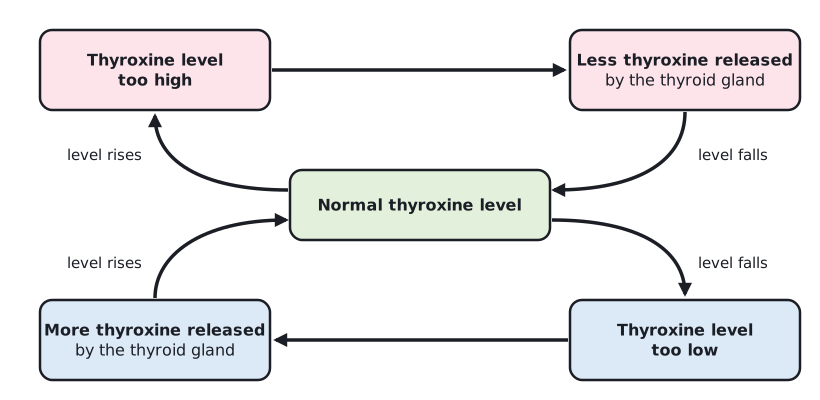 Tap to enlarge
Quick check
What is a hormone?
Show answer
A chemical secreted by a gland directly into the bloodstream, which acts on a target organ.
Which hormone lowers blood glucose concentration, and where is it made?
Show answer
Insulin, made in the pancreas.
Compare the cause of Type 1 and Type 2 diabetes.
Show answer
Type 1: the pancreas fails to produce enough insulin. Type 2: the body cells no longer respond to insulin.
Name the hormone that causes the release of the egg.
Show answer
Luteinising hormone (LH).
Give two non-hormonal methods of contraception.
Show answer
Any two of: condoms, diaphragms, spermicidal agents, abstaining, surgical sterilisation (non-hormonal intrauterine devices also accepted).