

MetabolismSpec 4.4.2.3
Metabolism is the sum of all the reactions in a cell or the body.
The energy transferred by respiration in cells is used by the organism for the continual enzyme controlled processes of metabolism that synthesise new molecules.
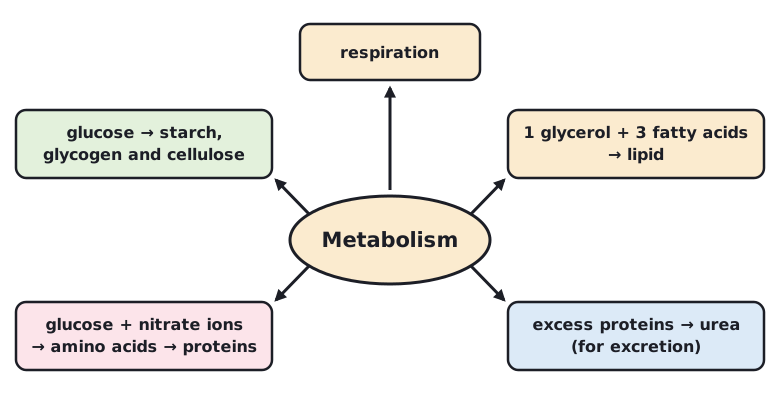
Metabolism includes:
- conversion of glucose to starch, glycogen and cellulose
- the formation of lipid molecules from a molecule of glycerol and three molecules of fatty acids
- the use of glucose and nitrate ions to form amino acids, which in turn are used to synthesise proteins
- respiration
- breakdown of excess proteins to form urea for excretion.
| Large molecule | Made from (synthesis) | Broken down into (breakdown) |
|---|---|---|
| Carbohydrates (starch, glycogen, cellulose) | Sugars such as glucose | Sugars |
| Proteins | Amino acids | Amino acids |
| Lipids | One glycerol and three fatty acids | Fatty acids and glycerol |
So sugars, amino acids, fatty acids and glycerol are the building blocks used to make carbohydrates, proteins and lipids, and the molecules that those large molecules are broken down into.
All of these aspects are covered in more detail in the relevant specification sections but are linked together here.
 Tap to enlarge
Quick check
Write the word equation for aerobic respiration.
Show answer
glucose + oxygen → carbon dioxide + water
What are the products of anaerobic respiration in yeast?
Show answer
Ethanol and carbon dioxide.
Why does anaerobic respiration transfer much less energy than aerobic respiration?
Show answer
Because the oxidation of glucose is incomplete.
Name the three things that increase during exercise to supply muscles with more oxygenated blood.
Show answer
Heart rate, breathing rate and breath volume.
What is metabolism?
Show answer
The sum of all the reactions in a cell or the body.