

AdaptationsSpec 4.7.1.4
Organisms have features called adaptations that enable them to survive in the conditions in which they normally live. Adaptations may be structural, behavioural or functional.
| Type | What it is | Examples |
|---|---|---|
| Structural | A feature of the body's structure | A thick layer of fat and a white coat on a polar bear. Spines and a thick, water-storing stem on a cactus |
| Behavioural | The way an organism acts | Migrating to a warmer place for winter. Hunting at night to avoid the heat of the day |
| Functional | How a body process works | A camel producing very little, concentrated urine to save water |
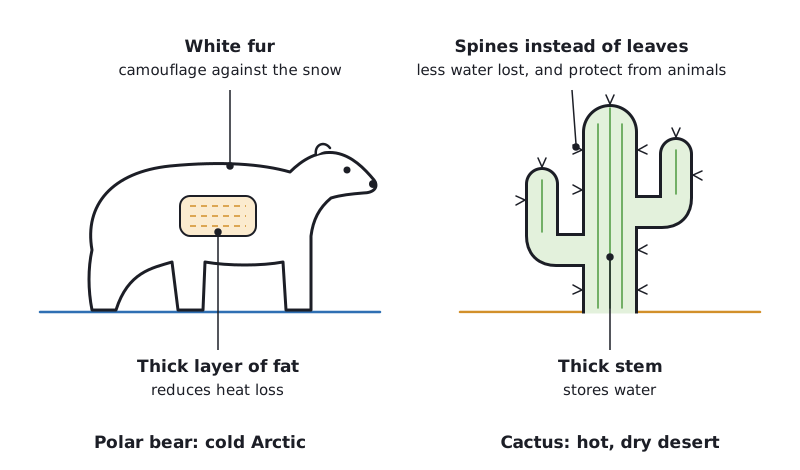 Tap to enlarge
Extremophiles
- Extremophile
- An organism that lives in an environment that is very extreme, such as at high temperature, pressure or salt concentration. Bacteria living in deep sea vents are extremophiles.
When you explain an adaptation, you are given information about the environment. Name the feature, then say how it helps survival.
Quick check
Put in order, smallest to largest: community, organism, ecosystem, population.
Show answer
Organism, population, community, ecosystem.
What do plants often compete for?
Show answer
Light, space, water and mineral ions from the soil.
What do animals often compete for?
Show answer
Food, mates and territory.
What is a stable community?
Show answer
One where all the species and environmental factors are in balance so population sizes remain fairly constant.
What is an extremophile?
Show answer
An organism that lives in very extreme conditions, such as high temperature, pressure or salt concentration.