

Required practical: the effect of pH on amylaseSpec 4.2.2.1
This practical investigates how pH affects the rate of reaction of the enzyme amylase. You use a continuous sampling technique to find the time taken to completely digest a starch solution at a range of pH values.
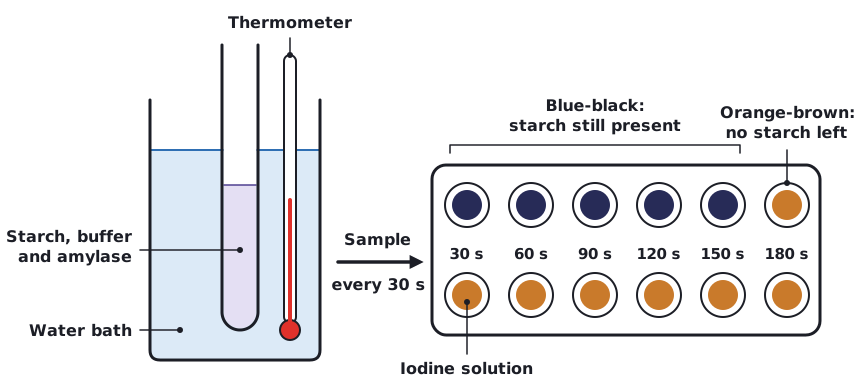
- Put a drop of iodine solution into each well of a spotting tile.
- Add starch solution and a buffer solution of a known pH to a test tube. Add amylase solution.
- Place the tube in a water bath (or use an electric heater) so the temperature stays constant. Start a stopwatch.
- Every 30 seconds, take a sample from the tube and add it to a fresh drop of iodine.
- Stop when the iodine stays orange-brown. All the starch has been digested. Record the time taken.
- Repeat at a range of pH values, using a different buffer each time.
| Type | Variable |
|---|---|
| Independent | pH of the buffer |
| Dependent | Time taken for the starch to be completely digested (rate = 1 ÷ time) |
| Control | Temperature, volume and concentration of starch and amylase |
The shorter the time, the faster the rate. The rate is highest at the optimum pH. Away from the optimum, amylase is denatured and the starch takes much longer to digest, or is not digested at all.
 Tap to enlarge