

Protist diseasesSpec 4.3.1.5
The pathogens that cause malaria are protists. The malarial protist has a life cycle that includes the mosquito.
Malaria causes recurrent episodes of fever and can be fatal.
How malaria spreads
The mosquito is a vector: an organism that carries a pathogen from one host to another. A mosquito picks up the protist when it feeds on the blood of an infected person. It passes the protist on when it bites another person.
Controlling malaria
- Prevent the vectors, the mosquitos, from breeding.
- Use mosquito nets to avoid being bitten.
- Vector
- An organism that carries a pathogen from one host to another. For malaria the vector is the mosquito.
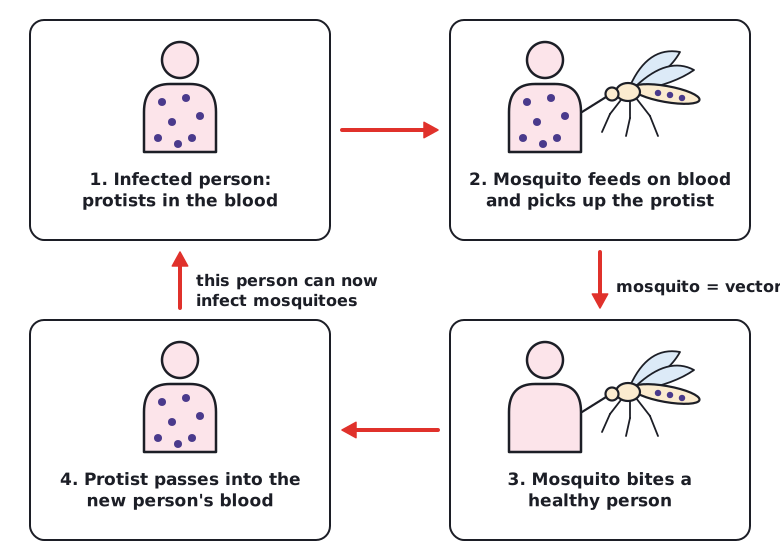 Tap to enlarge