

Control of blood glucose concentrationSpec 4.5.3.2
Blood glucose concentration is monitored and controlled by the pancreas.
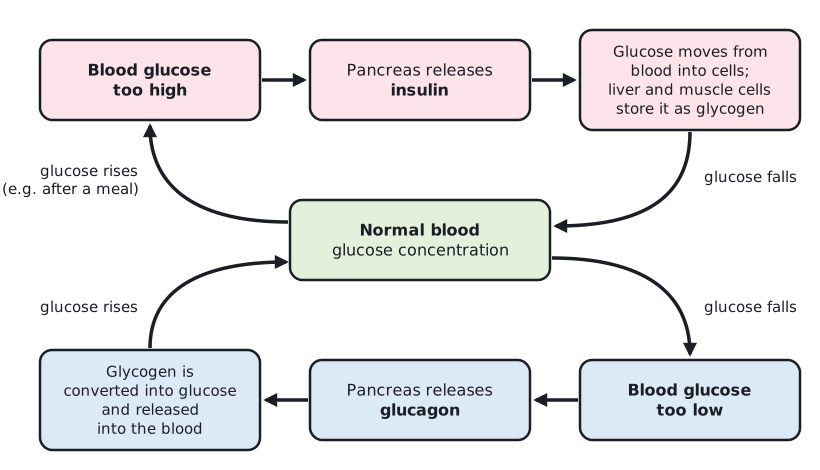
If the blood glucose concentration is too high, the pancreas produces the hormone insulin. Insulin causes glucose to move from the blood into the cells. In liver and muscle cells excess glucose is converted to glycogen for storage.
- Blood glucose concentration rises (for example after a meal).
- The pancreas detects this and produces insulin.
- Insulin causes glucose to move from the blood into the cells.
- In the liver and muscle cells, excess glucose is converted to glycogen.
- Blood glucose concentration falls back to the normal level.
Higher tier
Glucagon and negative feedback
Higher tier
If the blood glucose concentration is too low, the pancreas produces the hormone glucagon. Glucagon causes glycogen to be converted into glucose and released into the blood.
Higher tier
Insulin and glucagon work against each other in a negative feedback cycle. When one hormone brings the glucose level back to normal, the pancreas stops releasing it. This keeps blood glucose near the normal level.
Higher tier
| Insulin | Glucagon | |
|---|---|---|
| Released when blood glucose is | Too high | Too low |
| Effect on glucose | Glucose moves from blood into cells | Glycogen is converted into glucose and released into the blood |
| Effect on blood glucose | Falls | Rises |
 Tap to enlarge