
Book a tutor

Human insulin from genetically modified bacteria

Use of biological resources · Selective breeding and genetic modification · note 3 of 4

Human insulin from genetically modified bacteriaSpec 5.14

In short

Human insulin is made by genetically modified bacteria. The human insulin gene is cut out with a restriction enzyme, inserted into a plasmid cut with the same enzyme and joined by ligase, making a recombinant plasmid. The bacteria are grown in a fermenter, divide rapidly and make insulin, which is extracted and purified to treat diabetes.

People with type 1 diabetes need insulin. Large amounts of human insulin can be made by genetically modified (GM) bacteria grown in a fermenter.

  1. The human gene for insulin is cut out of human DNA using a restriction enzyme.
  2. A plasmid is cut with the same restriction enzyme, the gene is inserted and ligase joins the DNA. This makes a recombinant plasmid.
  3. The recombinant plasmid is put into bacteria. These GM bacteria now contain the human insulin gene.
  4. The bacteria are grown in a fermenter, where they divide rapidly to make huge numbers of bacteria.
  5. The bacteria make human insulin. The insulin is then extracted and purified before it is used to treat people with diabetes.

Conditions in the fermenter

  • Aseptic precautions, so that other micro-organisms do not contaminate the culture.
  • A supply of nutrients for growth.
  • An optimum temperature and pH for the bacteria.
  • Oxygen supplied, and the contents stirred (agitated) so that nutrients and oxygen are mixed evenly.
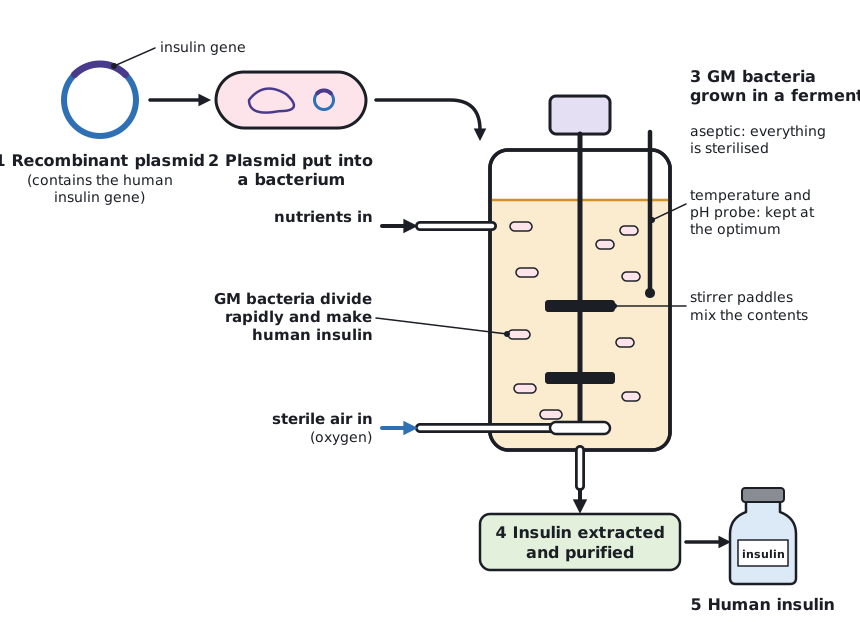
Flow diagram: a recombinant plasmid containing the human insulin gene is put into a bacterium; the GM bacteria are grown in a fermenter with nutrients in, sterile air (oxygen) in, stirrer paddles, a temperature and pH probe and aseptic conditions; they divide rapidly and make human insulin, which is extracted and purified to give bottled human insulin. (opens full size in a new tab)
GM bacteria grown in a fermenter make large amounts of human insulin.
Exam tip:

Bacteria are used because they reproduce very quickly, so a large amount of insulin is made in a short time.

Written and checked against the Edexcel IGCSE Biology (4BI1) specification · Updated October 2026

Frequently asked questions

What is selective breeding in plants?

Selective breeding in plants is when humans choose parent plants with a desired characteristic, such as disease resistance, larger grains or higher yield, and breed them together. The offspring that show the characteristic most strongly are bred again, and this is repeated over many generations until the characteristic is strongly shown in the variety.

What are the disadvantages of selective breeding?

Selective breeding reduces genetic variation, because only a few individuals are used for breeding. If a new disease or a change in the environment appears, all individuals may be affected. Breeding closely related individuals, called inbreeding, can also make harmful inherited conditions more common in domesticated animals.

What is genetic engineering in agriculture?

Genetic engineering in agriculture is transferring a gene for a useful characteristic from one species into a crop plant, making a genetically modified plant. For example, a gene from Bacillus thuringiensis makes crops produce Bt toxin, which kills insect pests. This gives higher yields and less insecticide use, though genes may spread to wild plants.

All 5 questions on Selective breeding and genetic modification