
Book a tutor

Eutrophication

Ecology and the environment · Human influences on the environment · note 5 of 6

EutrophicationSpec 4.17

In short

Eutrophication is when too many mineral ions, such as nitrates and phosphates from fertilisers, are leached into lakes and rivers. Algae grow quickly, forming an algal bloom that blocks light, so plants below cannot photosynthesise and die. Decomposing bacteria feed on the dead material and use up the oxygen in aerobic respiration, so fish die.

Eutrophication happens when too many mineral ions, such as nitrates and phosphates from fertilisers, enter lakes and rivers. Leaching is the washing of dissolved minerals out of the soil by rain. Fertiliser that crops have not taken up is leached into streams and rivers.

  1. Nitrates and other minerals from fertilisers are leached from fields into the water.
  2. Algae in the water grow very quickly because of the extra minerals, forming a layer on the surface (an algal bloom).
  3. The layer blocks light, so plants and algae lower down cannot photosynthesise and die.
  4. Bacteria (decomposers) feed on the dead material and their numbers increase.
  5. The bacteria use up oxygen in the water for aerobic respiration.
  6. Fish and other aquatic animals die from lack of oxygen, so biodiversity falls.
Common mistake:

The fish do not die because the algae poison them. The main cause is the decomposers feeding on the dead plants and algae, which use up the oxygen.
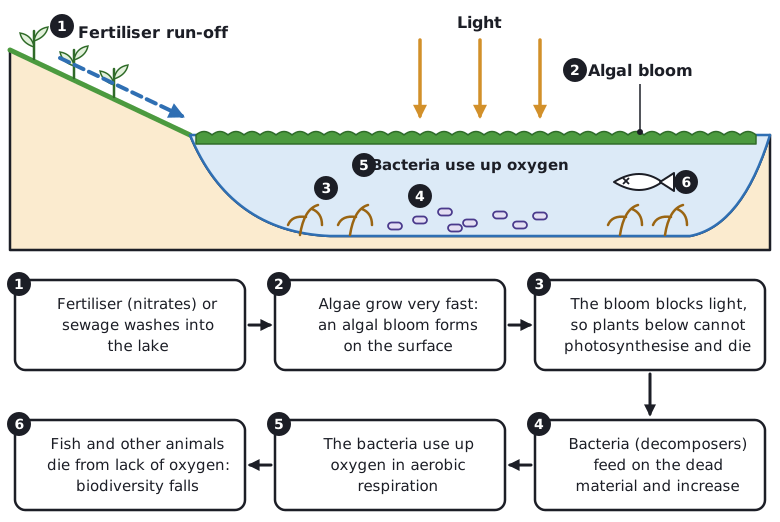
Lake cross-section showing fertiliser run-off, an algal bloom blocking light, dead plants on the lake bed, bacteria using up oxygen and a dead fish, numbered to match a six-step flow chart of eutrophication. (opens full size in a new tab)
Eutrophication: extra nitrates cause an algal bloom, plants die, decomposers use up the oxygen and fish die.

Written and checked against the Edexcel IGCSE Biology (4BI1) specification · Updated October 2026

Frequently asked questions

What is eutrophication and what causes it?

Eutrophication happens when too many mineral ions, such as nitrates and phosphates from fertilisers, are leached into lakes and rivers. Algae grow rapidly and block light, so plants below die. Decomposing bacteria feed on the dead material and use up the oxygen in aerobic respiration, so fish and other animals die.

How does deforestation affect the carbon cycle?

Biology only Deforestation raises the carbon dioxide concentration of the air. With fewer trees there is less photosynthesis, so less carbon dioxide is removed and less oxygen is released. Burning the felled trees releases carbon dioxide by combustion, and decay releases it by respiration of decomposers. This adds to the enhanced greenhouse effect.

How does the enhanced greenhouse effect cause global warming?

The Earth gives out infrared radiation, and greenhouse gases absorb some of it and radiate it back towards the Earth. Human activities, such as burning fossil fuels, increase these gases, so more infrared radiation is trapped. The average surface temperature rises, which is global warming, causing rising sea levels and more extreme weather.

All 5 questions on Human influences on the environment