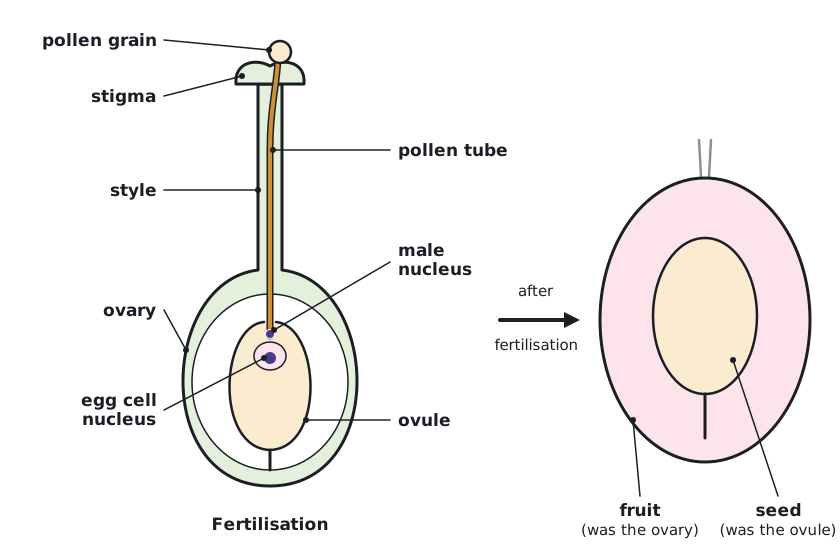
Fertilisation in a flowering plant is the fusion of the male gamete nucleus with the egg cell nucleus in an ovule. After pollination, a pollen tube grows from the pollen grain down through the style into an ovule, carrying the male nucleus. The fertilised ovule then develops into a seed, and the ovary develops into a fruit.
After pollination, a pollen grain on the stigma grows a pollen tube. The tube grows down through the style towards the ovary and into an ovule. The nucleus of the male gamete travels down the tube.
A pollen grain lands on the stigma (pollination).
A pollen tube grows out of the pollen grain and down through the style to the ovary.
The pollen tube enters an ovule.
The nucleus of the male gamete fuses with the nucleus of the female gamete (egg cell) in the ovule. This is fertilisation.
The fertilised ovule develops into a seed. The ovary develops into a fruit which surrounds the seed.
Tap to enlarge (opens full size in a new tab)The pollen tube carries the male nucleus to the egg cell. After fertilisation the ovule becomes the seed and the ovary becomes the fruit.
Common mistake:
Pollination is not the same as fertilisation. Pollination is the transfer of pollen to the stigma. Fertilisation is the fusion of the male and female gametes.
Written and checked against the Edexcel IGCSE Biology (4BI1) specification · Updated October 2026
Frequently asked questions
What is the difference between sexual and asexual reproduction?
Sexual reproduction involves two parents and the fusion of male and female gametes, so the offspring are genetically different from each other and the parents. Asexual reproduction involves one parent and no gametes. The offspring are made by mitosis, so they are genetically identical clones and the population has very little variation.
How are wind-pollinated flowers adapted?
Wind-pollinated flowers have anthers that hang outside the flower on long filaments, so the wind can blow the pollen away. They make very large amounts of light, smooth pollen. Their large, feathery stigmas hang outside the flower to catch pollen from the air, and their petals are small and dull because insects are not needed.
What is the difference between pollination and fertilisation in plants?
Pollination is the transfer of pollen grains from an anther to a stigma. Fertilisation happens afterwards, when a pollen tube has grown down the style into an ovule and the male gamete nucleus fuses with the egg cell nucleus. The fertilised ovule then becomes a seed and the ovary becomes a fruit.

 (opens full size in a new tab)