
The enhanced greenhouse effect and global warmingSpec 4.15
In short
The enhanced greenhouse effect is the extra warming caused when human activities increase the amount of greenhouse gases. These gases absorb infrared radiation given out by the Earth and radiate it back, so more heat is trapped and the average surface temperature rises, called global warming. Consequences include rising sea levels, extreme weather and changes in species distribution.
Some greenhouse effect is natural and necessary. The enhanced greenhouse effect is the extra warming caused by human activities that increase the amount of greenhouse gases.
- Radiation from the Sun passes through the atmosphere and warms the surface of the Earth.
- The warm Earth gives out infrared radiation (heat) towards space.
- Greenhouse gases in the atmosphere absorb some of this infrared radiation and radiate it in all directions, including back towards the Earth. This keeps the Earth warm.
- When humans increase the amount of greenhouse gases, more infrared radiation is absorbed and sent back to the Earth. This is the enhanced greenhouse effect.
- The average temperature of the Earth's surface rises. This is global warming.
Possible consequences of global warming
- Ice caps and glaciers melt and the oceans expand as they warm, so sea levels rise. Low-lying coastal land can flood.
- Weather patterns change, with more extreme events such as droughts, floods and storms.
- Habitats change, so the distribution of species changes. Species that cannot move or adapt may become extinct, so biodiversity falls.
- Crop yields may change in some regions, which affects food production.
The greenhouse effect is not the same as the hole in the ozone layer. Do not mention ozone when explaining global warming.
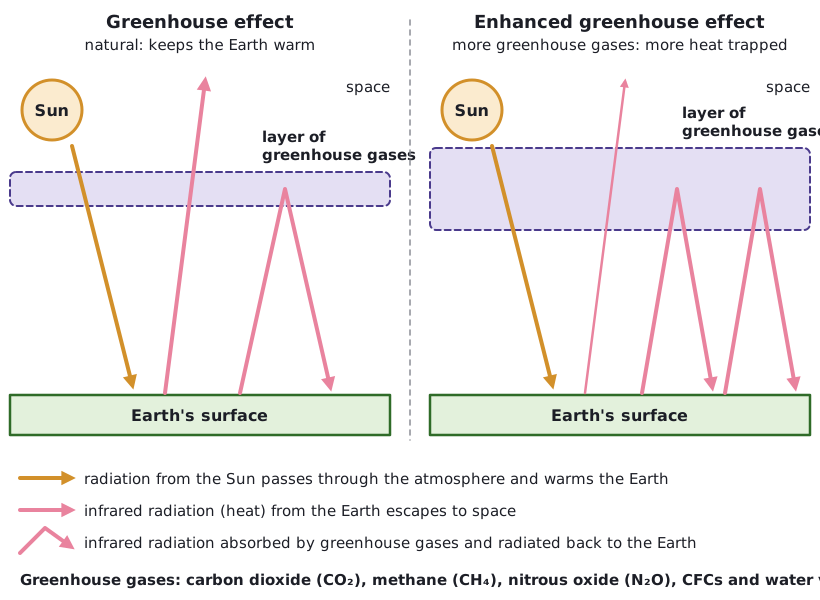 (opens full size in a new tab)
Written and checked against the Edexcel IGCSE Biology (4BI1) specification · Updated October 2026