

BacteriaSpec 1.3
Bacteria are prokaryotic organisms. They are microscopic and single-celled, and they do not have a nucleus.
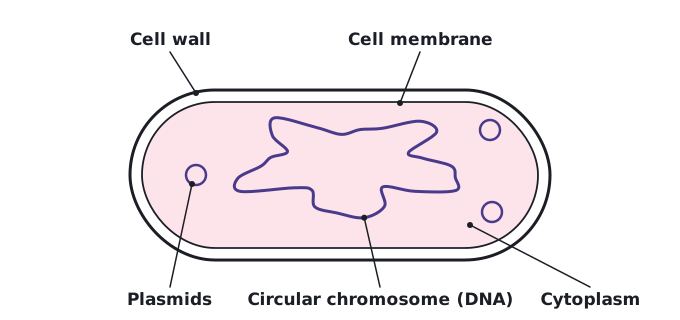
- Cell wall
- Surrounds the cell and supports it.
- Cell membrane
- Controls the movement of substances into and out of the cell.
- Cytoplasm
- Where the chemical reactions of the cell happen.
- Circular chromosome
- A single loop of DNA found free in the cytoplasm, not enclosed in a nucleus.
- Plasmids
- Small rings of extra DNA, separate from the circular chromosome.
 (opens full size in a new tab)
Most bacteria feed off other living or dead organisms. Some bacteria can carry out photosynthesis.
| Bacterium | Shape | Importance |
|---|---|---|
| Lactobacillus bulgaricus | Rod-shaped | Used in the production of yoghurt from milk |
| Pneumococcus | Spherical | A pathogen that causes pneumonia |
Common mistake:
Bacteria do have DNA. Write that it is not in a nucleus, never that bacteria have no DNA.