

TranspirationSpec 2.56B
- Transpiration
- The evaporation of water from the surface of a plant.
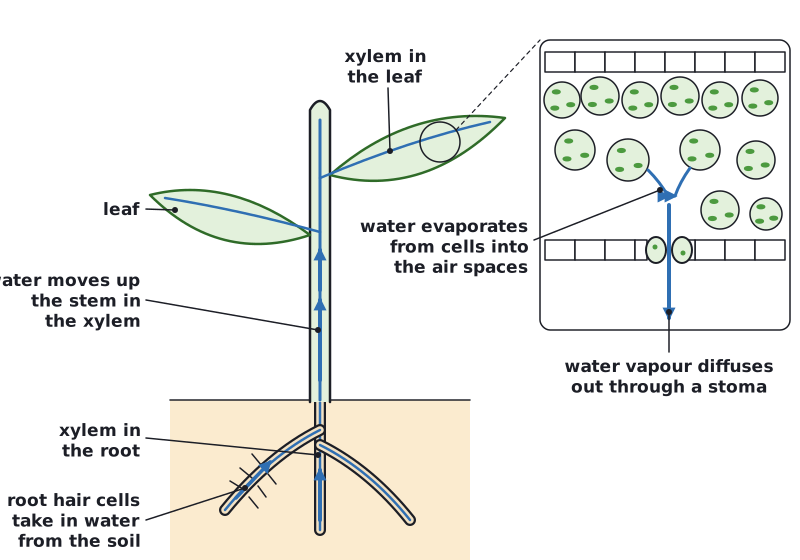
Most transpiration happens in the leaves. Water evaporates from the surface of the cells inside the leaf into the air spaces, then water vapour diffuses out through the stomata into the air.
- Water is absorbed from the soil by the root hair cells.
- Water moves up through the xylem to the leaves.
- Water evaporates from the surface of the cells in the leaf into the air spaces.
- Water vapour diffuses out of the leaf through the stomata.
As water leaves the leaf, more water is pulled up the xylem to replace it. This continuous flow is called the transpiration stream. It carries mineral ions from the roots to the leaves, and it supplies water for photosynthesis and keeps the cells firm.
 (opens full size in a new tab)
Exam tip:
Water is lost by evaporation and then diffusion. Do not say that water 'escapes' or 'leaks' from the leaf.