

Air pollution: sulfur dioxide and carbon monoxideSpec 4.12
Burning fuels releases pollutant gases into the air. Two that you must know about are sulfur dioxide and carbon monoxide.
Sulfur dioxide (SO₂)
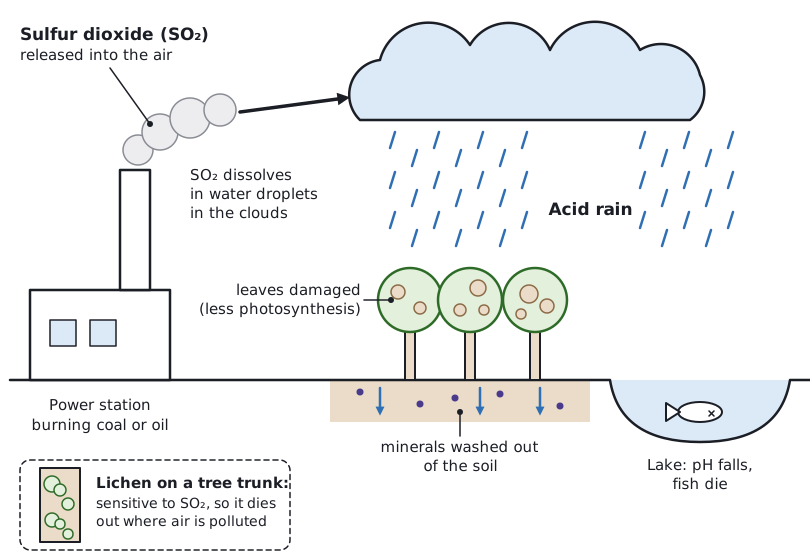
Sulfur dioxide is released when fossil fuels that contain sulfur, such as coal and oil, are burned (for example in power stations). It dissolves in rain water to form acidic solutions, so the rain becomes acid rain.
- Acid rain lowers the pH of lakes and rivers. Many fish and other aquatic organisms cannot survive in acidic water, so their numbers fall.
- Acid rain damages the leaves of trees, so they photosynthesise less. It also washes minerals out of the soil, so the trees grow poorly or die.
- Some lichens are very sensitive to sulfur dioxide, so they die out where the air is polluted. Their absence shows that the air is polluted.
- Sulfur dioxide gas also irritates the lungs and can cause breathing problems.
Carbon monoxide (CO)
Carbon monoxide is a poisonous gas formed by the incomplete combustion of carbon-containing fuels, when there is not enough oxygen. Sources include car engines and faulty gas heaters. It is colourless and has no smell.
- Carbon monoxide combines with haemoglobin in red blood cells, much more strongly than oxygen does.
- Haemoglobin that is combined with carbon monoxide cannot carry oxygen, so less oxygen is transported to the tissues.
- Cells then cannot respire aerobically enough. The effects are headaches, dizziness and fainting, and a high dose can cause death.
For carbon monoxide, link three ideas: it binds to haemoglobin, so less oxygen is carried, so less aerobic respiration. For sulfur dioxide, link it to acid rain and then to the effect on lakes or trees.
 (opens full size in a new tab)