
Fish farmingSpec 5.9B
In short
Fish farming raises large numbers of fish, such as salmon, in tanks, ponds or net cages to provide protein. Farmers maintain water quality, control intraspecific predation by keeping fish of the same size together, control interspecific predation by keeping out other species, control disease, remove waste, control feeding and use selective breeding so fish grow quickly.
Fish farming raises large numbers of fish, such as salmon, in tanks, ponds or net cages, to provide a source of protein for people. The farmer controls conditions so that the fish grow quickly and survive.
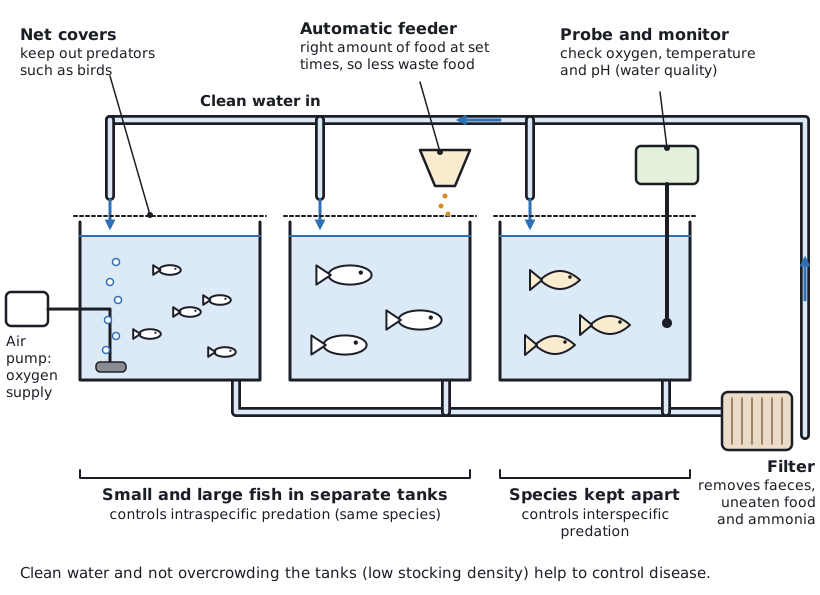 (opens full size in a new tab)
| Method | Why it is used |
|---|---|
| Maintaining water quality (oxygen, temperature, pH and removal of toxic substances) | Fish stay healthy and grow quickly. Low oxygen or toxic ammonia would kill or stunt fish. |
| Controlling intraspecific predation, by keeping fish of the same size together | Larger fish of the same species eat smaller ones, so grading the fish by size reduces losses. |
| Controlling interspecific predation, by keeping species separate and keeping out predators such as birds and seals | Other species would eat the fish, so fewer fish survive to be harvested. |
| Controlling disease, using clean water, vaccines, medicines and low stocking densities | Disease spreads fast in crowded fish, so it would reduce the yield. |
| Removing waste products, by filtering or exchanging the water | Faeces and uneaten food build up and release toxic substances such as ammonia and cause pollution. |
| Controlling the quality and frequency of feeding | A balanced diet with the right protein content gives fast growth. Feeding the right amount at set times avoids waste food, which pollutes the water. |
| Selective breeding | Breeding from fish that grow fastest, resist disease or have good flesh quality produces fish with these features in later generations. |
Learn the control points and say what goes wrong without each. Use the terms intraspecific (same species) and interspecific (different species) correctly.
Quick check
What gas makes bread dough rise?
Show answer
Carbon dioxide, from anaerobic respiration in yeast.
Write the word equation for anaerobic respiration in yeast.
Show answer
Glucose → ethanol + carbon dioxide.
Which bacterium is used to make yoghurt, and what does it make from lactose?
Show answer
Lactobacillus; it makes lactic acid.
Why are aseptic precautions used in a fermenter?
Show answer
To stop unwanted micro-organisms getting in and competing with or spoiling the product.
Biology only Give one way of controlling disease on a fish farm.
Show answer
Any one from: clean water, vaccines, medicines, low stocking density.
Written and checked against the Edexcel IGCSE Biology (4BI1) specification · Updated October 2026