
Plant tropisms and auxinSpec 2.83, 2.84, 2.85
In short
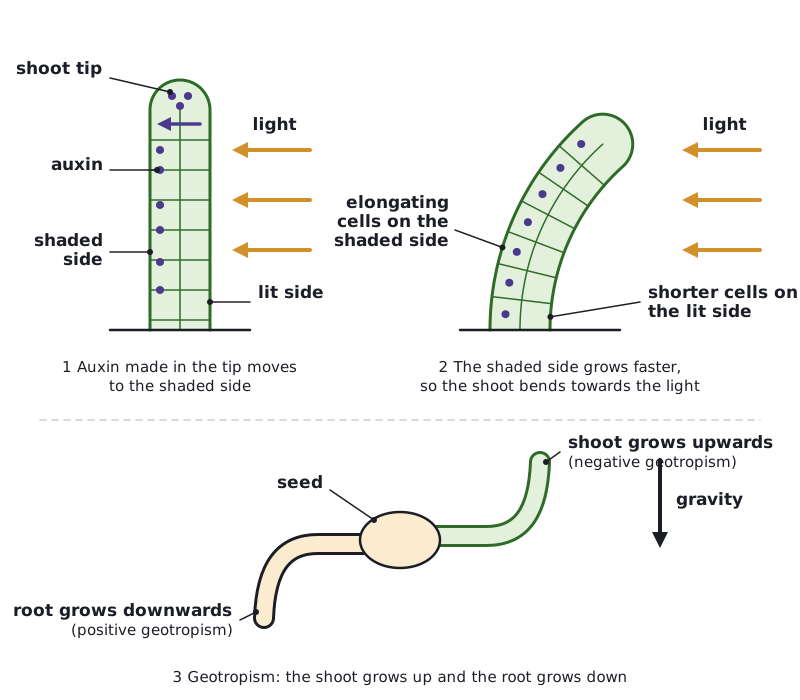
A tropism is a plant growth response to a stimulus. Shoots show positive phototropism and negative geotropism; roots show negative phototropism and positive geotropism. Auxin, a plant hormone made in the shoot tip, moves to the shaded side when light comes from one side. It makes those cells elongate more, so the shoot bends towards the light.
Plants respond to stimuli, such as light and gravity. They respond by growing in a particular direction. A growth response to a stimulus is called a tropism. Growth towards the stimulus is positive. Growth away from the stimulus is negative.
- Phototropism: growth in response to light.
- Geotropism (also called gravitropism): growth in response to gravity.
| Response to light | Response to gravity | |
|---|---|---|
| Shoot (stem) | Positive phototropism (grows towards light) | Negative geotropism (grows upwards, away from gravity) |
| Root | Negative phototropism (grows away from light) | Positive geotropism (grows downwards, towards gravity) |
These responses help the plant. Shoots grow towards light to take in more light for photosynthesis. Roots grow down into the soil, where they take in water and ions.
The role of auxin in phototropism of stems
Auxin is a plant hormone. It is made in the tip of the shoot and controls growth by making cells elongate (get longer).
- Auxin is made in the tip of the shoot.
- When light shines from one side, auxin moves to the shaded side of the shoot.
- Auxin makes the cells on the shaded side elongate more, so they grow faster than the cells on the lit side.
- The shoot bends towards the light.
 (opens full size in a new tab)
Tell the story in order: where auxin is made, where it moves to, what it does to cell growth there, and which way the shoot bends as a result.
Quick check
What three parts are needed for a co-ordinated response?
Show answer
A stimulus, a receptor and an effector.
What is homeostasis?
Show answer
The maintenance of a constant internal environment.
Give two examples of homeostasis.
Show answer
Control of body water content and control of body temperature.
Which way do roots respond to gravity?
Show answer
Roots grow downwards: positive geotropism.
Where does auxin move to when light shines on a shoot from one side?
Show answer
To the shaded side, where it makes cells elongate.
Written and checked against the Edexcel IGCSE Biology (4BI1) specification · Updated October 2026