

Enzymes as biological catalystsSpec 2.10
Metabolic reactions are the chemical reactions that happen in living cells. They are controlled by enzymes. Enzymes are proteins that act as biological catalysts. A catalyst speeds up a reaction without being used up. Each enzyme has a region called the active site, which has a particular shape.
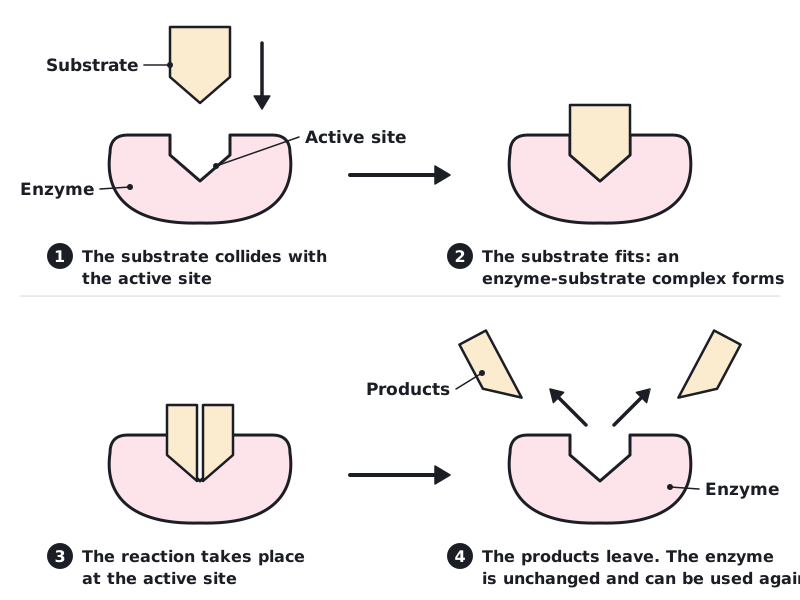
The molecule an enzyme acts on is called the substrate. The substrate has a shape that is complementary to the active site, so it fits in, like a key in a lock. This is called the lock and key model.
- The substrate collides with the active site of the enzyme.
- The substrate fits into the active site, forming an enzyme-substrate complex.
- The reaction takes place at the active site.
- The product or products leave the active site and the enzyme is free to be used again.
Enzymes are specific. Only a substrate with a shape that fits the active site can bind to it, so each enzyme catalyses only one type of reaction.
 (opens full size in a new tab)
The mark scheme word is complementary. Say the shape of the substrate is complementary to the shape of the active site, not that they are 'the same'.