

Platelets and blood clottingSpec 2.64B
When a blood vessel is cut, the blood must clot. Platelets are small fragments of cells that take part in this. Clotting prevents blood loss and stops micro-organisms entering the body through the wound.
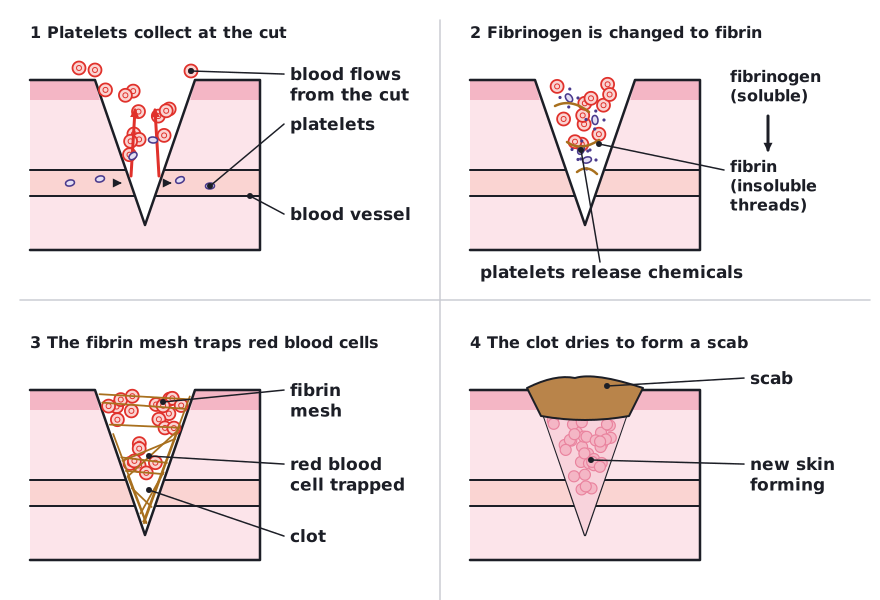
- Platelets collect at the cut and release chemicals.
- These chemicals cause the soluble protein fibrinogen in the plasma to change into insoluble fibrin.
- Fibrin forms a mesh of fibres across the wound.
- The mesh traps red blood cells and forms a clot.
- The clot dries to form a scab, which seals the wound while the skin underneath repairs.
 (opens full size in a new tab)
Give two reasons why clotting matters: it stops blood loss and it stops pathogens (micro-organisms) entering the body.
Quick check
Name the four components of blood.
Show answer
Red blood cells, white blood cells, platelets and plasma.
Give three adaptations of a red blood cell for carrying oxygen.
Show answer
Biconcave shape, no nucleus, contains haemoglobin.
How do phagocytes destroy pathogens?
Show answer
They ingest (engulf) them.
What do lymphocytes release?
Show answer
Antibodies that are specific to the pathogen.
Biology only What do memory cells allow after vaccination?
Show answer
Antibody production that is sooner, faster and in greater quantity if the pathogen enters again.