

Responding to change: stimulus, receptor, effectorSpec 2.80, 2.82
Organisms must respond to changes in their environment to survive. A change in the environment is a stimulus. Animals and plants both respond to stimuli, but they do it in different ways.
- Animals use the nervous system (fast, electrical impulses) and hormones (chemical messengers in the blood).
- Plants respond mainly by changing the way they grow, using plant hormones.
A co-ordinated response needs three parts: a stimulus, a receptor and an effector.
| Part | What it does | Example |
|---|---|---|
| Stimulus | A change in the environment | A hot object touching the hand |
| Receptor | A cell or organ that detects the stimulus | Temperature receptors in the skin |
| Effector | A muscle or gland that carries out the response | A muscle that contracts to pull the hand away |
In animals, a coordination centre (such as the brain or spinal cord) usually links the receptor to the effector. It receives information from the receptor and sends signals to the effector.
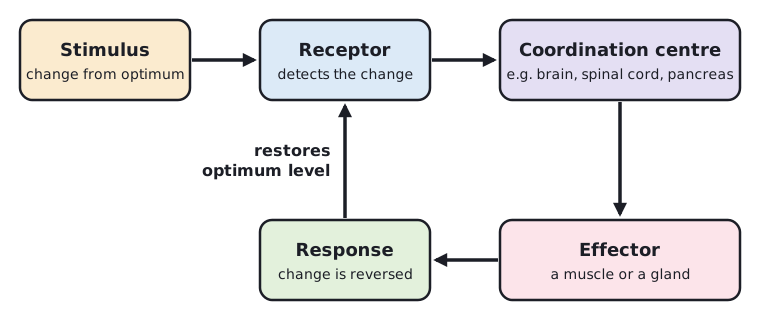 (opens full size in a new tab)
Common mistake:
Effectors are muscles or glands only. Do not write that the brain or a receptor is an effector.