

Germination and food reservesSpec 3.6
Germination is when a seed begins to grow into a seedling. A seed contains an embryo plant and a store of food. The food reserves are mainly starch and oils (fats), with some protein, stored in the cotyledons or in a separate food store.
When a seed germinates, enzymes break down the stored food into smaller soluble molecules: starch to sugars, oils to fatty acids and glycerol, and proteins to amino acids. Sugars are used in respiration to release energy. The products are also used to make new cells for growth.
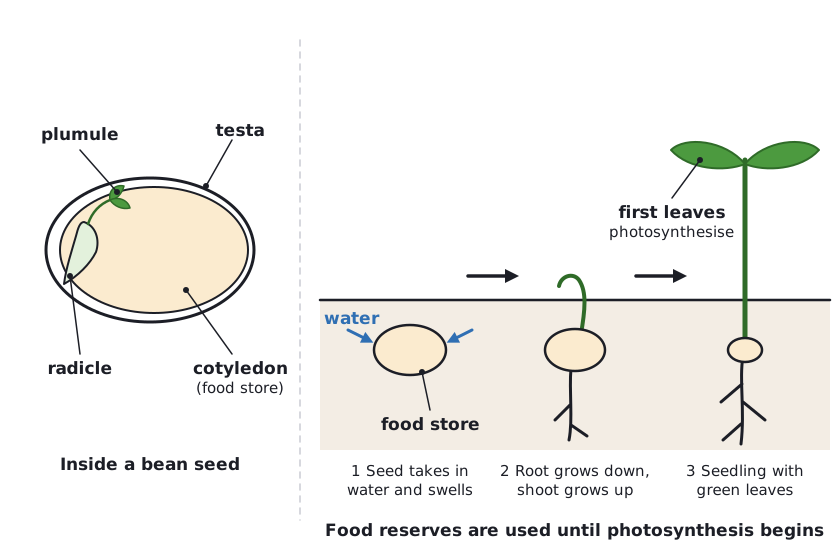
A young seedling cannot make its own food at first. It uses the food reserves until its first leaves have grown above the soil and can carry out photosynthesis.
- The seed takes in water and swells.
- Enzymes break down the stored starch and oil into soluble substances.
- The root grows downwards and the shoot grows upwards, using energy from respiration.
- The first leaves reach the light and start to photosynthesise.
- The seedling no longer relies on the food reserves.
 (opens full size in a new tab)
The dry mass of a germinating seed falls at first, because food reserves are used up in respiration and it cannot yet photosynthesise. Dry mass only increases once the leaves start photosynthesising.