

Cloning mammals: Dolly the sheepSpec 5.19B
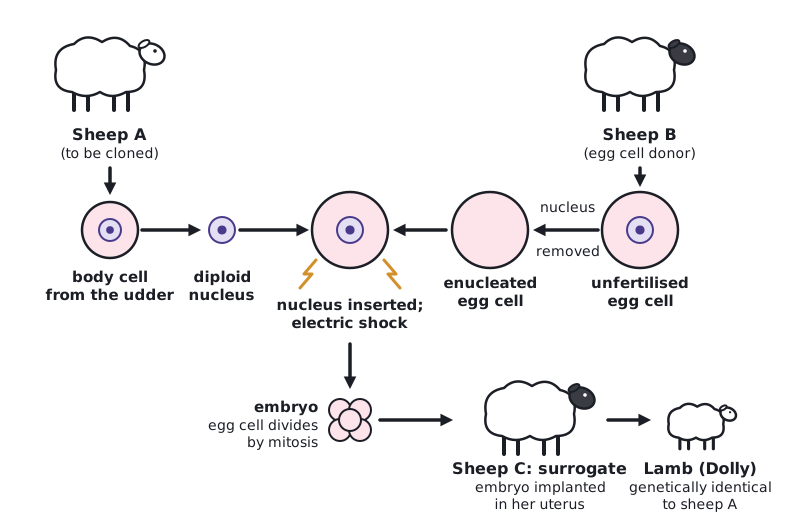
A clone is a genetically identical copy. Mammals can be cloned by putting a diploid nucleus from a mature body cell into an enucleated egg cell (an egg cell with its nucleus removed). This was how Dolly the sheep was produced.
- A diploid nucleus is taken from a mature body cell of the animal to be cloned. For Dolly this was a cell from the udder of an adult sheep.
- The nucleus is removed from an unfertilised egg cell, so the egg cell is enucleated.
- The diploid nucleus from the mature cell is introduced into the enucleated egg cell. An electric shock is used to fuse them and to stimulate the egg cell to start dividing.
- The egg cell divides by mitosis to form an embryo.
- The embryo is implanted into the uterus of a surrogate mother, where it develops. The lamb born is genetically identical to the sheep that gave the nucleus.
Common mistake:
The egg cell has its own nucleus removed, and the nucleus from the body cell is diploid. Do not say the egg cell is fertilised by a sperm.
 (opens full size in a new tab)