

DiffusionSpec 2.15
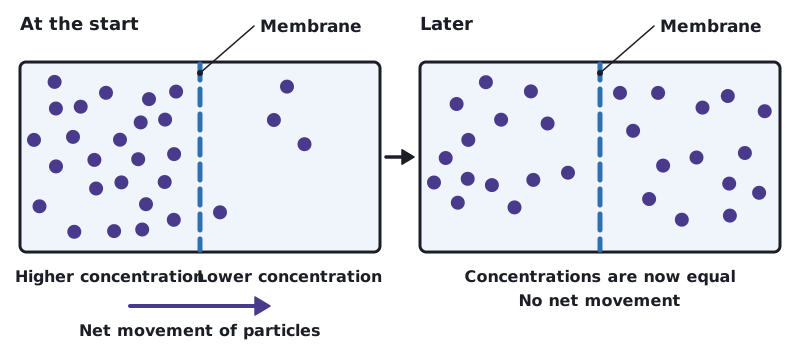
Diffusion is the net movement of particles from an area of higher concentration to an area of lower concentration. The particles move down a concentration gradient. It is a passive process, so it does not need energy from respiration.
Oxygen, carbon dioxide and dissolved substances such as glucose can diffuse into and out of cells through the cell membrane. For example, oxygen diffuses into a respiring cell because the concentration of oxygen is lower inside the cell, where it is being used up.
 (opens full size in a new tab)
Exam tip:
Always say net movement. Particles move in all directions, but more move down the gradient than up it.