

Water pollution by sewageSpec 4.16
Sewage is waste water from homes and industry. If it is released into rivers or lakes without proper treatment, it causes pollution with several biological consequences.
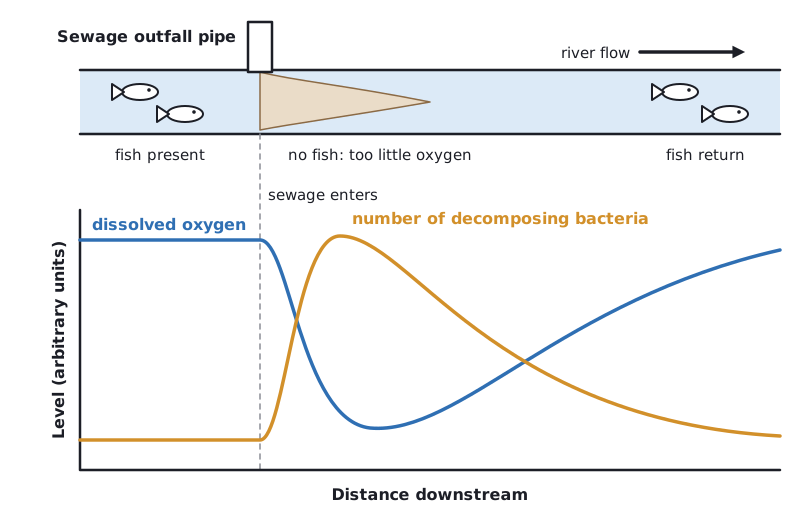
- Sewage contains a lot of organic matter. Bacteria and other decomposers feed on it and respire aerobically, so they use up the dissolved oxygen in the water.
- As the oxygen level falls, fish and other aquatic animals that need oxygen die. Only organisms that tolerate low oxygen survive, so biodiversity falls.
- Sewage contains pathogens (disease-causing microorganisms). People who drink the water or use it for washing food can catch diseases, such as cholera and typhoid.
- Sewage also contains nitrates and phosphates. These act as fertiliser for algae and can lead to eutrophication.
- Untreated sewage enters the river.
- Decomposers multiply, feeding on the organic matter.
- The decomposers use up oxygen in aerobic respiration.
- The oxygen concentration of the water falls.
- Fish and other animals die, so the food web is disrupted.
Exam tip:
The key link is: more decomposers, so more oxygen used, so less oxygen for fish. Do not just say the sewage poisons the fish.
 (opens full size in a new tab)