
Cloned transgenic animals and human proteinsSpec 5.20B
In short
Cloned transgenic animals are animals, such as sheep or goats, that carry a human gene and are cloned to make many identical copies. They produce human proteins, often in their milk, where the protein is collected and purified. Examples are alpha-1-antitrypsin, used to treat emphysema, and blood clotting factors, used to treat haemophilia.
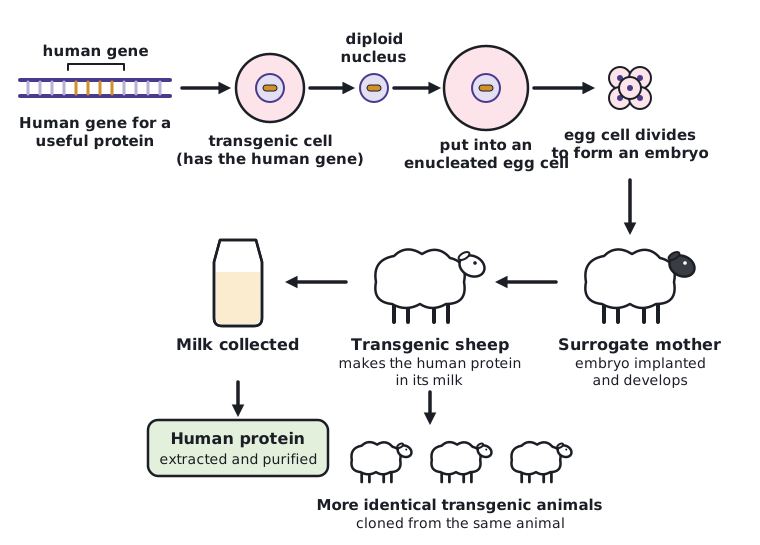
Animals can be made transgenic by adding a human gene to their cells. Cloning can then produce many identical animals that all carry that gene. These cloned transgenic animals can be used to produce human proteins.
- The human gene for a useful protein is inserted into the cells of an animal, such as a sheep or goat, making them transgenic.
- A transgenic cell is used to produce a cloned embryo, using the nuclear transfer method.
- The embryo is implanted into a surrogate mother and develops into a transgenic animal.
- The animal makes the human protein, often in its milk, where it can be collected and purified.
- More identical animals can be cloned from it to make larger amounts.
- Examples of human proteins made this way include alpha-1-antitrypsin (used to treat the lung disease emphysema) and blood clotting factors (used to treat haemophilia).
- These proteins are used to treat human diseases and conditions.
Two ideas to link: transgenic gives the animal the human gene, and cloning gives you many identical animals that all make the protein.
 (opens full size in a new tab)
Quick check
What is micropropagation?
Show answer
Growing new plants from explants in vitro, on sterile nutrient medium.
What are the small pieces of plant tissue used in micropropagation called?
Show answer
Explants.
What type of nucleus is put into the enucleated egg cell to clone a mammal?
Show answer
A diploid nucleus from a mature body cell.
Name a human protein made by cloned transgenic animals.
Show answer
Alpha-1-antitrypsin (or a blood clotting factor).
Written and checked against the Edexcel IGCSE Biology (4BI1) specification · Updated October 2026