

Practical: starch, light, carbon dioxide and chlorophyllSpec 2.23
Plants store the glucose they make as starch. A leaf that has been photosynthesising contains starch, so testing a leaf for starch shows that photosynthesis has happened. By changing one condition at a time, you can show that photosynthesis needs light, carbon dioxide and chlorophyll.
Before starting, the plant is destarched: it is left in a dark cupboard for 24 to 48 hours. With no light it cannot photosynthesise, and it uses up its stored starch.
The starch test on a leaf
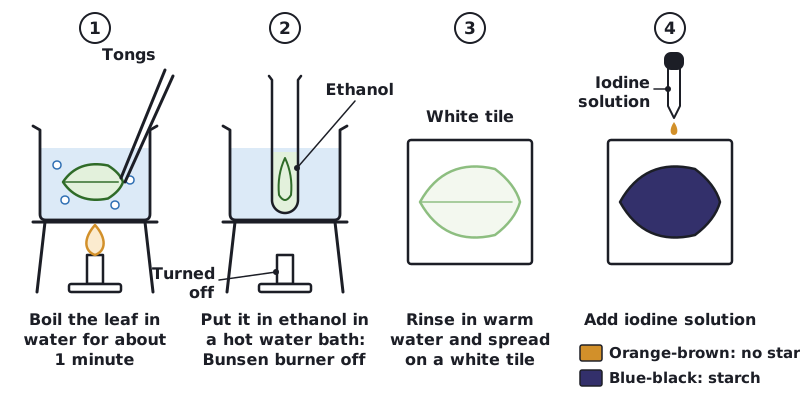
- Dip the leaf in boiling water for about one minute. This kills the cells and stops chemical reactions, and it softens the leaf so the iodine can get in.
- Turn off the Bunsen burner. Put the leaf in a boiling tube of ethanol and stand the tube in the hot water. The ethanol removes the chlorophyll, so the leaf turns pale. Ethanol is flammable, so there must be no naked flame.
- Rinse the leaf in warm water to soften it, then spread it on a white tile.
- Add drops of iodine solution. A blue-black colour shows that starch is present. If there is no starch, the iodine stays orange-brown.
 (opens full size in a new tab)
Showing what photosynthesis needs
| Requirement | Method | Result (after the starch test) |
|---|---|---|
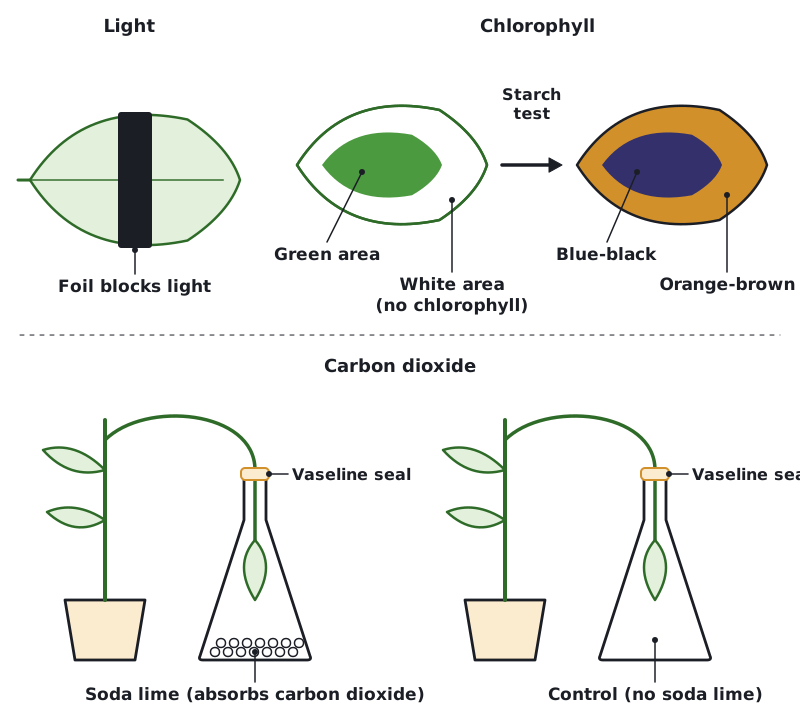
| Light | Cover part of a leaf on a destarched plant with foil or black paper, or a stencil, and leave the plant in bright light for several hours. | Uncovered area turns blue-black. Covered area stays orange-brown, so light is needed. |
| Carbon dioxide | Enclose one leaf of a destarched plant, still attached to the plant, in a sealed flask containing soda lime (or sodium hydroxide solution), which absorbs carbon dioxide. Set up a control leaf in the same way in a flask without soda lime. Leave the plant in bright light for several hours. | Control leaf turns blue-black. Leaf without carbon dioxide stays orange-brown, so carbon dioxide is needed. |
| Chlorophyll | Destarch a plant with variegated leaves, which have green areas (with chlorophyll) and white areas (without). Leave it in bright light for several hours. | Green areas turn blue-black. White areas stay orange-brown, so chlorophyll is needed. |
 (opens full size in a new tab)
Safety: wear eye protection. Ethanol is flammable, so turn off the Bunsen burner before heating it in a water bath. Soda lime and sodium hydroxide are corrosive, and iodine solution stains skin and clothes.
If asked why the plant is destarched, say it makes sure any starch found afterwards was made during the investigation. If asked why the leaf is boiled in ethanol, say it removes chlorophyll so the colour change can be seen.
Quick check
Give the word equation for photosynthesis.
Show answer
Carbon dioxide + water → glucose + oxygen (in the presence of light and chlorophyll).
Which form of energy is photosynthesis converting light into?
Show answer
Chemical energy, stored in glucose.
Name three factors that can affect the rate of photosynthesis.
Show answer
Carbon dioxide concentration, light intensity and temperature.
Why do plants need magnesium ions and nitrate ions?
Show answer
Magnesium ions are needed to make chlorophyll. Nitrate ions are needed to make amino acids.
What colour does iodine solution turn when starch is present?
Show answer
Blue-black.