

The reflex arcSpec 2.90
A reflex is a fast, automatic response to a stimulus that does not involve conscious thought. The pathway it follows is a reflex arc. Reflexes protect the body from harm. An example is pulling your finger away from a hot object.
- A receptor in the skin of the finger detects the heat (the stimulus).
- A sensory neurone carries impulses to the spinal cord (CNS).
- At a synapse the impulses pass to a relay neurone in the spinal cord.
- At another synapse the impulses pass to a motor neurone.
- The motor neurone carries the impulses to an effector, a muscle in the arm.
- The muscle contracts and the finger is pulled away.
The impulses do not have to reach the conscious part of the brain before the response happens, so the reflex is very fast.
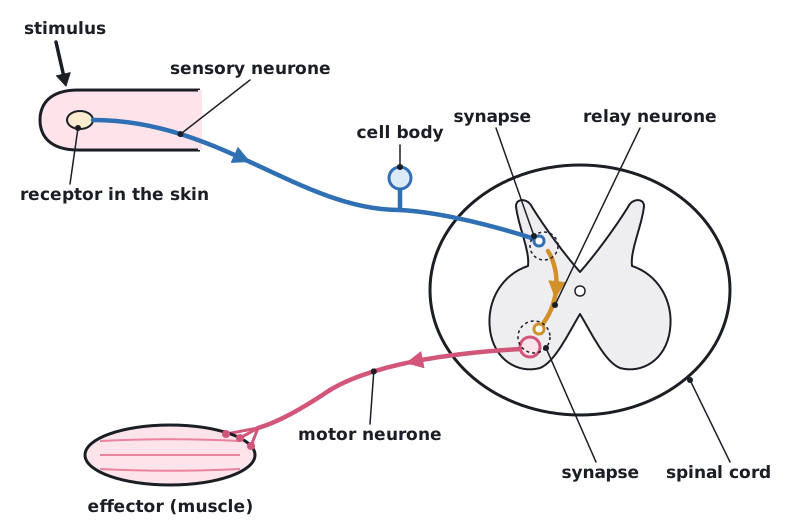 (opens full size in a new tab)
Exam tip:
Write the pathway in order and name each neurone: sensory, relay, motor. The effector is the muscle, not the motor neurone.