

The alimentary canal and peristalsisSpec 2.27, 2.28
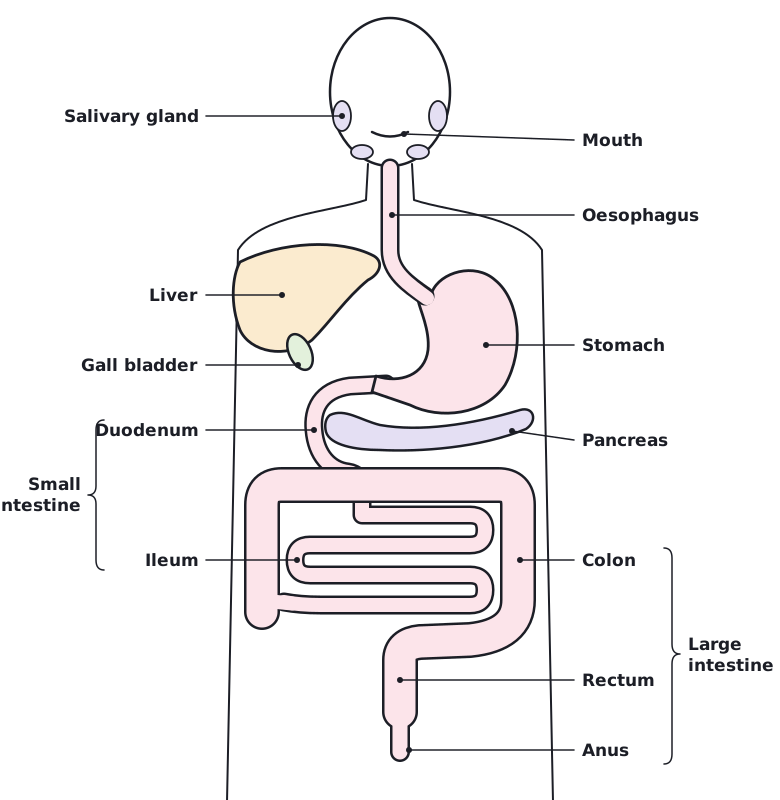
The alimentary canal is the tube that runs from the mouth to the anus. Food is digested and absorbed as it moves through. The liver, gall bladder and pancreas are not part of the tube, but they help with digestion.
| Part | Function |
|---|---|
| Mouth | Teeth chew food into smaller pieces. Saliva contains amylase, which starts the digestion of starch. |
| Oesophagus | Carries food from the mouth to the stomach by peristalsis |
| Stomach | Churns food with acidic juice. Hydrochloric acid kills many bacteria. Protease digests protein. |
| Small intestine: duodenum | First part. Receives bile and pancreatic juice. Digestion continues here. |
| Small intestine: ileum | Second, longest part. Digestion is finished and the small soluble molecules are absorbed into the blood. |
| Pancreas | Makes digestive enzymes (amylase, protease and lipase) and releases them into the duodenum |
| Large intestine: colon | Absorbs water from the remaining material |
| Large intestine: rectum | Stores faeces, which leave the body through the anus |
 (opens full size in a new tab)
Peristalsis
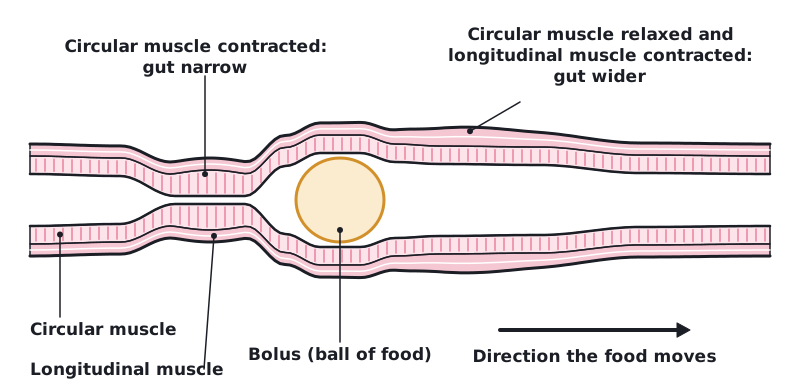
Food is moved along the gut by peristalsis. The walls of the gut contain circular muscles and longitudinal muscles. Waves of muscle contraction pass along the gut.
- The circular muscles behind the food contract. This squeezes the food forward.
- The circular muscles in front of the food relax and the longitudinal muscles contract. This widens the tube ahead of the food.
- The wave of contraction moves along the gut, pushing the food towards the stomach, then through the intestines.
 (opens full size in a new tab)
Common mistake:
Peristalsis is a wave of muscle contraction that pushes food along. It does not break food down chemically, and it is not the same as chewing.