
Glasshouses and polythene tunnelsSpec 5.1, 5.2
In short
Glasshouses and polythene tunnels increase crop yield by letting the farmer control the conditions plants grow in. They trap heat, let light in and allow carbon dioxide to be added, so photosynthesis is faster and more glucose is made for growth. Adding carbon dioxide or heat only helps if that factor is limiting the rate of photosynthesis.
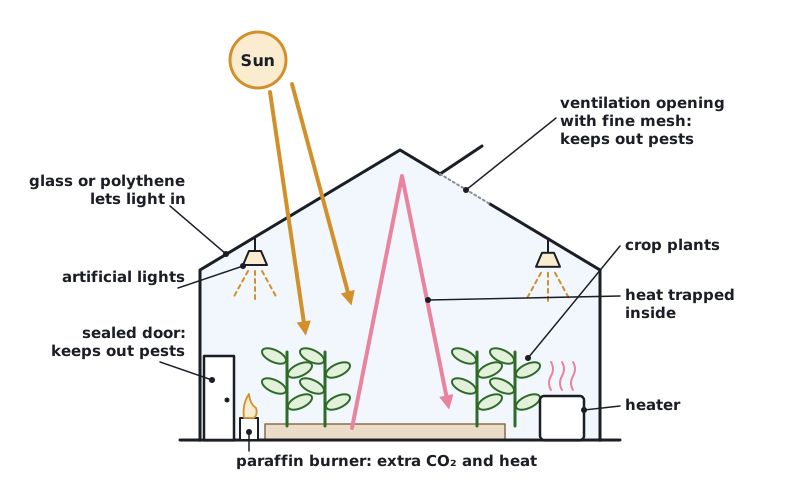
Farmers can increase the yield of some crops, such as tomatoes and cucumbers, by growing them in glasshouses or polythene tunnels. These structures let the farmer control the conditions around the plants instead of relying on the weather.
How glasshouses and polythene tunnels help
- They trap heat from the Sun, so the air is warmer than outside. Heaters can be added to keep the temperature at the optimum for the enzymes in photosynthesis.
- Clear glass or polythene lets light in. Artificial lighting can be used to extend the day length so plants photosynthesise for longer.
- Carbon dioxide can be added to the air, for example by burning paraffin, which also releases heat.
- They protect crops from strong wind, heavy rain, frost and many pests, so less of the crop is damaged or lost.
- The growing season can be longer, so crops can be grown at times of year when they would not grow outside.
 (opens full size in a new tab)
Effect of carbon dioxide and temperature on yield
Photosynthesis makes the glucose that plants use to grow. Its rate can be limited by light intensity, carbon dioxide concentration or temperature, whichever is in shortest supply.
- Increased carbon dioxide: if carbon dioxide is the limiting factor, adding more increases the rate of photosynthesis. The plants make more glucose, grow faster and the yield rises.
- Increased temperature: a warmer glasshouse increases the rate of photosynthesis, because the enzymes work faster, up to the optimum temperature. Above the optimum the enzymes are denatured and the rate falls.
| Condition controlled | Benefit to the plant | Cost or limit |
|---|---|---|
| Higher CO₂ | Faster photosynthesis if CO₂ was limiting, so a higher yield | Cost of the fuel or gas; no extra benefit if another factor is limiting |
| Higher temperature | Faster photosynthesis and growth, up to the optimum | Heating costs; too hot denatures enzymes |
| Extra light | More photosynthesis, especially in winter | Cost of electricity |
Say that the factor must be limiting for adding more to help. Then link the faster photosynthesis to more glucose and so more growth and a higher yield.
Written and checked against the Edexcel IGCSE Science Double Award (4SD0) specification · Updated October 2026