

Carbohydrates, proteins and lipidsSpec 2.7, 2.8
Carbohydrates, proteins and lipids (fats and oils) are the three main groups of biological molecules. They are all made from a small number of chemical elements.
| Biological molecule | Elements present |
|---|---|
| Carbohydrates | Carbon, hydrogen and oxygen (C, H, O) |
| Proteins | Carbon, hydrogen, oxygen and nitrogen (C, H, O, N), and sometimes sulfur (S) |
| Lipids (fats and oils) | Carbon, hydrogen and oxygen (C, H, O) |
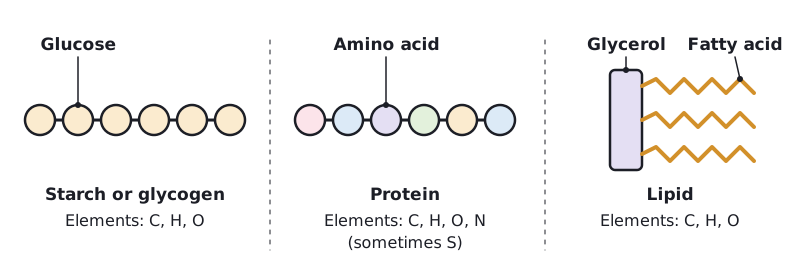
Carbohydrates, proteins and lipids are large molecules made up from smaller basic units. Many small units are joined together to make one large molecule.
| Large molecule | Made from |
|---|---|
| Starch | Many simple sugars (glucose) joined together |
| Glycogen | Many simple sugars (glucose) joined together |
| Protein | Amino acids |
| Lipid | Fatty acids and glycerol (one glycerol and three fatty acids) |
Starch is the storage carbohydrate in plants. Glycogen is the storage carbohydrate in animals. Both are made from glucose, which is a simple sugar.
 (opens full size in a new tab)
Exam tip:
A lipid is made from one glycerol and three fatty acids. Learn the numbers 1 and 3, and remember that, of the three groups, only proteins contain nitrogen.