
White blood cells and the immune responseSpec 2.62
In short
The immune response is the defence of the body against pathogens by white blood cells. Phagocytes ingest pathogens and destroy them, a process called phagocytosis. Lymphocytes recognise the antigens on a pathogen's surface and release antibodies. Each antibody is specific: its shape fits the antigens on one pathogen only, and it helps to destroy that pathogen.
The immune system protects the body from disease. White blood cells are the main part of this defence. Two types do different jobs: phagocytes and lymphocytes.
- Pathogen
- A microorganism that causes disease.
- Antigen
- A molecule on the surface of a pathogen that the immune system recognises as foreign.
- Antibody
- A protein released by a lymphocyte that is specific to one antigen and helps to destroy the pathogen.
Phagocytes
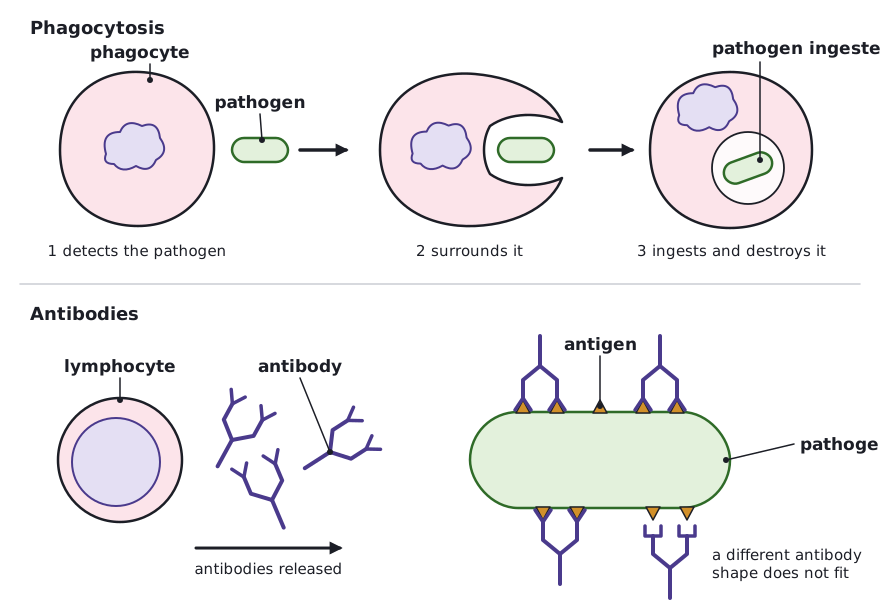
- A phagocyte detects a pathogen.
- It surrounds the pathogen and ingests (takes in) it. This is called phagocytosis.
- The pathogen is then destroyed inside the phagocyte.
Lymphocytes
- Lymphocytes recognise the antigens on the surface of a pathogen.
- They release antibodies into the blood.
- Each antibody is specific to one pathogen. Its shape fits the antigens on that pathogen only.
- The antibodies attach to the pathogen and help to destroy it.
 (opens full size in a new tab)
Antibodies are specific. Say that the antibody has a shape that fits the antigen on that pathogen, and that a different pathogen needs a different antibody.
Quick check
Name the four components of blood.
Show answer
Red blood cells, white blood cells, platelets and plasma.
Give three adaptations of a red blood cell for carrying oxygen.
Show answer
Biconcave shape, no nucleus, contains haemoglobin.
How do phagocytes destroy pathogens?
Show answer
They ingest (engulf) them.
What do lymphocytes release?
Show answer
Antibodies that are specific to the pathogen.
Written and checked against the Edexcel IGCSE Science Double Award (4SD0) specification · Updated October 2026