
EutrophicationSpec 4.17
In short
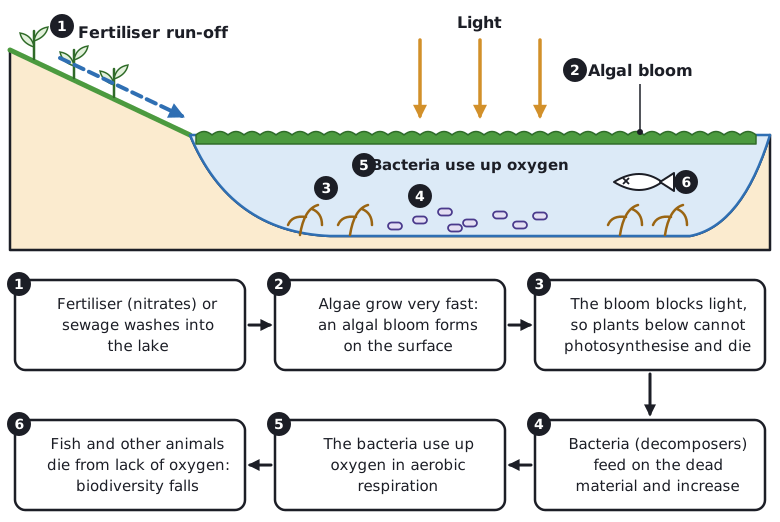
Eutrophication is when too many mineral ions, such as nitrates and phosphates from fertilisers, are leached into lakes and rivers. Algae grow quickly, forming an algal bloom that blocks light, so plants below cannot photosynthesise and die. Decomposing bacteria feed on the dead material and use up the oxygen in aerobic respiration, so fish die.
Eutrophication happens when too many mineral ions, such as nitrates and phosphates from fertilisers, enter lakes and rivers. Leaching is the washing of dissolved minerals out of the soil by rain. Fertiliser that crops have not taken up is leached into streams and rivers.
- Nitrates and other minerals from fertilisers are leached from fields into the water.
- Algae in the water grow very quickly because of the extra minerals, forming a layer on the surface (an algal bloom).
- The layer blocks light, so plants and algae lower down cannot photosynthesise and die.
- Bacteria (decomposers) feed on the dead material and their numbers increase.
- The bacteria use up oxygen in the water for aerobic respiration.
- Fish and other aquatic animals die from lack of oxygen, so biodiversity falls.
The fish do not die because the algae poison them. The main cause is the decomposers feeding on the dead plants and algae, which use up the oxygen.
 (opens full size in a new tab)
Quick check
What gas causes acid rain?
Show answer
Sulfur dioxide.
Why is carbon monoxide poisonous?
Show answer
It combines with haemoglobin, so the blood carries less oxygen.
Name the five greenhouse gases in the spec.
Show answer
Water vapour, carbon dioxide, nitrous oxide, methane and CFCs.
Why does sewage pollution kill fish?
Show answer
Decomposers feeding on it use up the oxygen in the water.
Written and checked against the Edexcel IGCSE Science Double Award (4SD0) specification · Updated October 2026