

The placenta and amniotic fluidSpec 3.11, 3.12
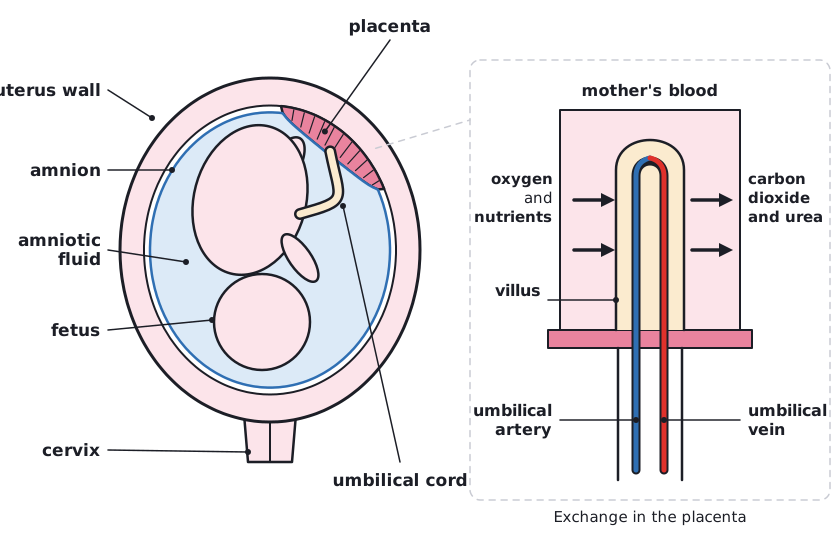
After the embryo implants in the uterus lining, the placenta grows. It is a disc-shaped organ that attaches the embryo to the uterus wall. The embryo is joined to the placenta by the umbilical cord, which contains blood vessels.
The role of the placenta
The mother's blood and the embryo's blood flow close together in the placenta, but they do not mix. Substances pass between them by diffusion.
- Oxygen and nutrients (such as glucose and amino acids) diffuse from the mother's blood into the embryo's blood. This provides the embryo with its nutrition.
- Carbon dioxide and urea diffuse from the embryo's blood into the mother's blood, to be removed.
- The placenta has many villi. These give a large surface area for exchange, so more substances can diffuse. A good blood supply and thin walls also make diffusion faster.
Amniotic fluid
The embryo develops inside a bag called the amnion. The amnion is filled with amniotic fluid. The fluid protects the developing embryo by absorbing shocks and cushioning it against knocks and bumps to the mother's abdomen.
 (opens full size in a new tab)
Common mistake:
The mother's blood and the embryo's blood do not mix. Substances move between them by diffusion across the placenta.