
Book a tutor

Ventilation: breathing in and out

Structure and functions in living organisms · Gas exchange in humans · note 2 of 5

Ventilation: breathing in and outSpec 2.47

In short

Ventilation is the movement of air into and out of the lungs. When you breathe in, the intercostal muscles and diaphragm contract, the ribs move up and out and the diaphragm flattens. The volume of the thorax increases, so the pressure falls below atmospheric pressure and air moves in. Breathing out reverses these changes.

Ventilation is the movement of air into and out of the lungs. The lungs have no muscle of their own. Air moves because the intercostal muscles and the diaphragm change the volume of the thorax, and this changes the air pressure inside it.

Breathing in and breathing out
Breathing in (inhaling)Breathing out (exhaling)
Intercostal musclesContractRelax
RibsMove up and outMove down and in
DiaphragmContracts and flattensRelaxes and moves up (dome shape)
Volume of the thoraxIncreasesDecreases
Pressure in the thoraxDecreases, below atmospheric pressureIncreases, above atmospheric pressure
Movement of airAir moves into the lungsAir moves out of the lungs

Air always moves from a region of higher pressure to a region of lower pressure. When you breathe in, the pressure inside the thorax falls below the pressure of the air outside, so air moves in. When you breathe out, the pressure inside rises above the outside pressure, so air moves out.

Common mistake:

Do not say that the lungs 'pull in' air or that the ribs 'push' air in. The muscles change the volume and pressure of the thorax, and the difference in pressure moves the air.
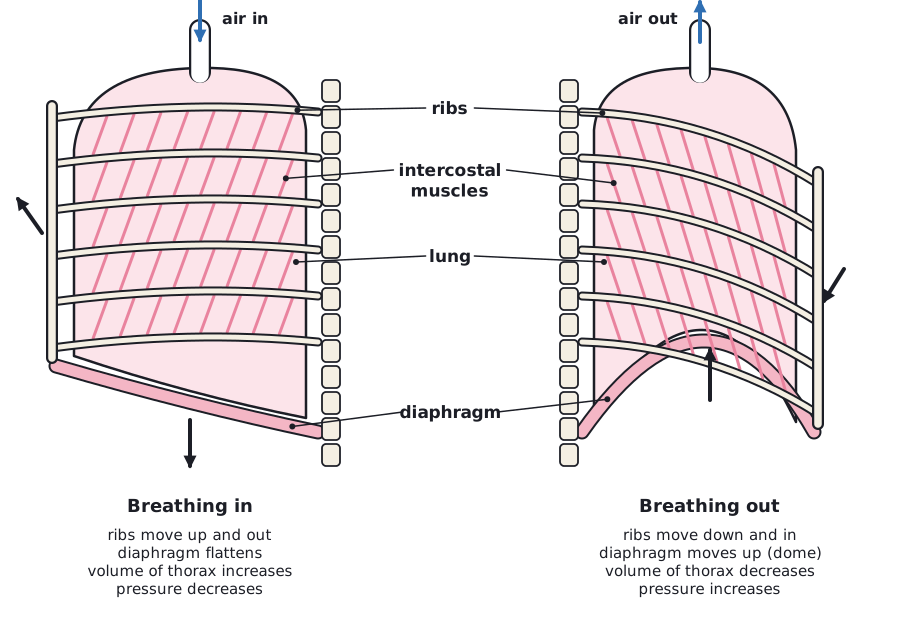
Side views of the thorax breathing in and breathing out: breathing in, the ribs move up and out and the diaphragm flattens, so the volume of the thorax increases, the pressure decreases and air moves in; breathing out, the ribs move down and in and the diaphragm moves up into a dome, so the volume decreases, the pressure increases and air moves out. Labels: ribs, intercostal muscles, lung, diaphragm. (opens full size in a new tab)
Breathing in: volume up, pressure down, so air moves in. Breathing out: volume down, pressure up, so air moves out.

Written and checked against the Edexcel IGCSE Science Double Award (4SD0) specification · Updated October 2026

Frequently asked questions

How are alveoli adapted for gas exchange?

Alveoli are adapted for gas exchange by diffusion. Millions of alveoli give a very large surface area, and their walls and the capillary walls are each one cell thick, giving a short diffusion distance. A rich capillary network and ventilation maintain a steep concentration gradient, and the moist lining lets gases dissolve.

What happens when you breathe in?

When you breathe in, the intercostal muscles contract and move the ribs up and out, and the diaphragm contracts and flattens. This increases the volume of the thorax, so the pressure inside falls below atmospheric pressure. Air moves from the higher pressure outside into the lungs. The lungs themselves have no muscle.

How does smoking affect the lungs?

Smoking damages the lungs because tar destroys the cilia, so mucus and trapped microorganisms are not removed, causing infections and a smoker's cough. Smoke irritates the airways, causing chronic bronchitis. In emphysema the alveolus walls break down, reducing the surface area for gas exchange. Carcinogens in tar can cause lung cancer.

All 5 questions on Gas exchange in humans