
The circulation systemSpec 2.69
In short
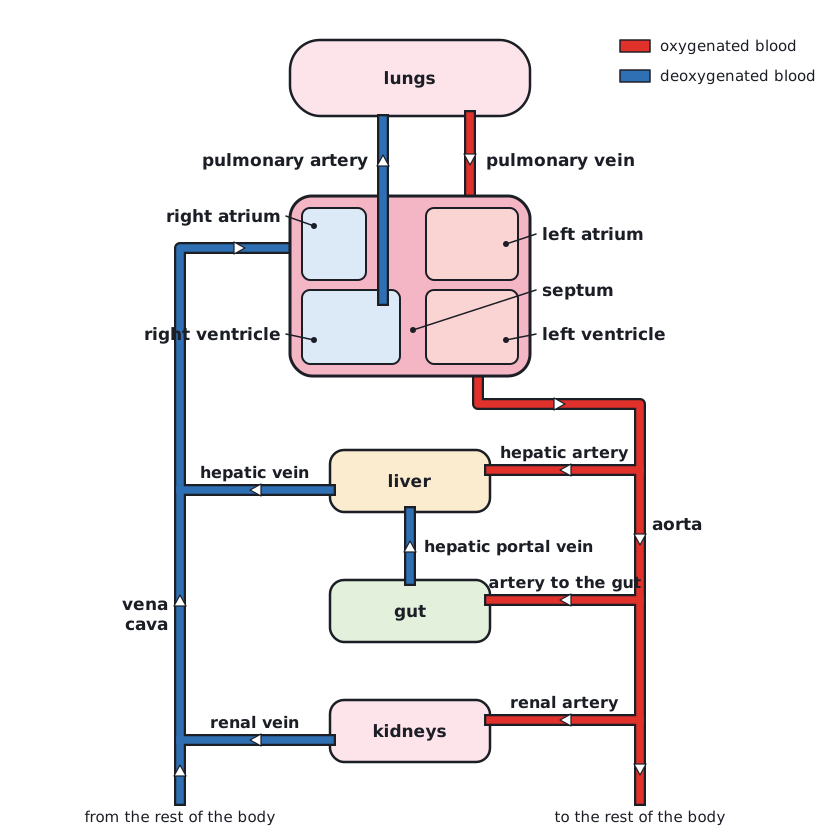
Humans have a double circulatory system: blood passes through the heart twice on each complete circuit, once to the lungs and back and once to the rest of the body and back. Blood leaves the heart in the aorta and pulmonary artery. The hepatic portal vein carries blood rich in digested food from the gut to the liver.
Humans have a double circulatory system. In one circuit, blood goes from the heart to the lungs and back. In the other, it goes from the heart to the rest of the body and back. Blood passes through the heart twice on each complete circuit of the body.
| Organ | Vessel | Carries blood |
|---|---|---|
| Heart and body | Vena cava | From the body to the right atrium |
| Heart and body | Aorta | From the left ventricle to the body |
| Lungs | Pulmonary artery | From the right ventricle to the lungs (deoxygenated) |
| Lungs | Pulmonary vein | From the lungs to the left atrium (oxygenated) |
| Liver | Hepatic artery | From the aorta to the liver (oxygenated) |
| Liver | Hepatic portal vein | From the gut to the liver, carrying digested food |
| Liver | Hepatic vein | From the liver to the vena cava |
| Kidneys | Renal artery | From the aorta to the kidneys |
| Kidneys | Renal vein | From the kidneys to the vena cava |
 (opens full size in a new tab)
Notice that the hepatic portal vein carries blood from the gut to the liver, not to the heart. After a meal this blood is rich in digested food. The liver processes it before the blood returns to the heart in the hepatic vein.
Do not mix up the hepatic artery (blood to the liver from the aorta), the hepatic portal vein (blood from the gut to the liver) and the hepatic vein (blood from the liver towards the heart).
Quick check
What is the function of the septum?
Show answer
It separates the left and right sides of the heart, so oxygenated and deoxygenated blood do not mix.
Why is the wall of the left ventricle thicker than the right?
Show answer
It pumps blood around the whole body, which needs higher pressure.
Why does heart rate rise during exercise?
Show answer
Muscles respire faster, so more oxygen and glucose must be delivered and more carbon dioxide removed.
Name the blood vessels that supply the heart muscle.
Show answer
Coronary arteries.
Which vessel carries blood from the gut to the liver?
Show answer
The hepatic portal vein.
Written and checked against the Edexcel IGCSE Science Double Award (4SD0) specification · Updated October 2026