
Asexual reproduction in plantsSpec 3.7
In short
Asexual reproduction in plants produces new plants that are clones, genetically identical to the parent. Strawberry plants reproduce naturally by runners, sideways stems that grow roots and new plantlets. Gardeners use an artificial method, cuttings: a short stem is planted in moist compost, grows roots and becomes a new plant with the parent's useful features.
Many plants can reproduce asexually. The new plants are clones of the parent. There are natural methods and artificial methods.
Natural method: runners
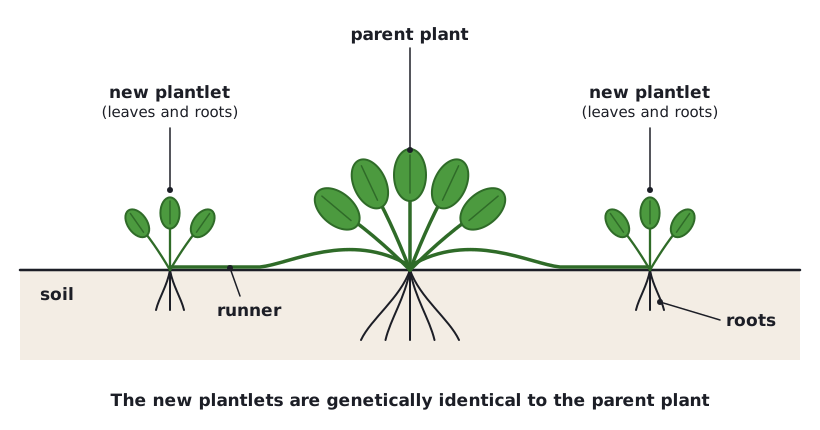
A strawberry plant grows runners. These are long stems that grow sideways along the ground. At intervals, roots and a new shoot grow from the runner, forming a new plantlet. When the runner dies, the plantlet becomes an independent plant that is genetically identical to the parent.
 (opens full size in a new tab)
Artificial method: cuttings
- Cut a short piece of stem from the parent plant, just below a node.
- Remove the lower leaves.
- Plant the cutting in moist compost.
- Keep it moist and covered so it does not lose too much water.
- Roots grow from the cut stem and a new plant develops, genetically identical to the parent.
| Method | Natural or artificial | Example |
|---|---|---|
| Runners | Natural: the plant does it without human help | Strawberry |
| Cuttings | Artificial: people do it to get new plants | Geranium, rose |
Gardeners use cuttings to produce lots of plants with the same useful features as the parent, because the offspring are genetically identical.
Quick check
How many parents are needed for asexual reproduction?
Show answer
One.
What is pollination?
Show answer
The transfer of pollen grains from an anther to a stigma.
What does the ovule become after fertilisation?
Show answer
A seed.
Name three conditions needed for germination.
Show answer
Water, oxygen and a suitable temperature.
Give one natural and one artificial method of asexual reproduction in plants.
Show answer
Natural: runners. Artificial: cuttings.
Written and checked against the Edexcel IGCSE Science Double Award (4SD0) specification · Updated October 2026