

Photosynthesis and its equationsSpec 2.18, 2.19
Photosynthesis is the process by which plants and algae make glucose. The energy comes from light, which is absorbed by the green pigment chlorophyll in the chloroplasts.
Photosynthesis is important because it converts light energy to chemical energy. The chemical energy is stored in the glucose that is made. Plants use this glucose for respiration and to build new plant material. Almost all food chains start with this stored energy.
Light energy is used to react carbon dioxide and water to produce glucose and oxygen.
| Substance | Reactant or product | Source or fate |
|---|---|---|
| Carbon dioxide | Reactant | Diffuses into the leaf from the air |
| Water | Reactant | Absorbed from the soil by the roots and carried to the leaf in the xylem |
| Glucose | Product | Used for respiration, or to build new plant material (biomass) |
| Oxygen | Product | Diffuses out of the leaf into the air |
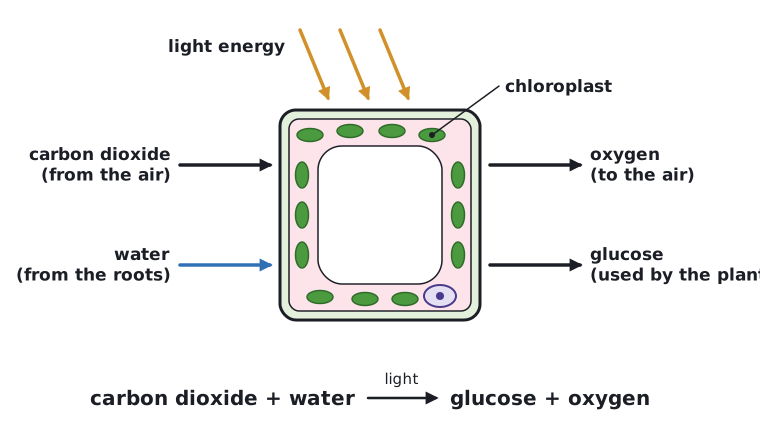 (opens full size in a new tab)
Light is the energy source, not a reactant, so it does not go in the word equation as a substance. Write 'in the presence of light' or put 'light energy' above the arrow. Check that the symbol equation is balanced: 6 carbon atoms, 12 hydrogen atoms and 18 oxygen atoms on each side.