
Coronary heart disease and its risk factorsSpec 2.67
In short
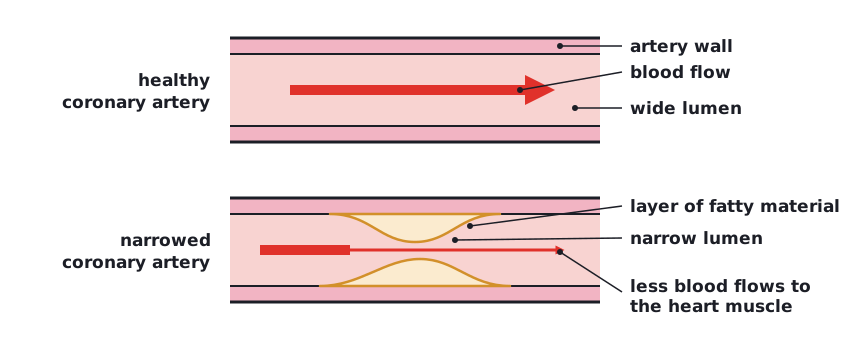
Coronary heart disease is a disease in which layers of fatty material build up inside the coronary arteries and narrow them. Less blood reaches the heart muscle, so it gets less oxygen, which can cause chest pain and a heart attack. Risk factors include a diet high in saturated fat and cholesterol, smoking, high blood pressure and lack of exercise.
The coronary arteries supply the heart muscle with oxygen and glucose. In coronary heart disease (CHD), layers of fatty material build up inside these arteries and narrow them. Less blood flows through, so the heart muscle gets less oxygen and may not be able to respire enough. This can cause chest pain and a heart attack.
 (opens full size in a new tab)
Risk factors
A risk factor is something that increases the chance of developing a disease. It does not mean that the disease is certain.
| Risk factor | How it increases the risk |
|---|---|
| Diet high in saturated fat and cholesterol | Fatty material builds up in the artery walls |
| Smoking | Damages the artery lining, raises blood pressure and reduces the oxygen carried by the blood |
| High blood pressure | Damages the artery walls, making fatty deposits more likely |
| Lack of exercise | Linked to obesity and high blood pressure |
| Obesity | Linked to high blood pressure and a diet high in fat |
| Stress | Linked to raised blood pressure |
| Genetic factors (family history) | Some people inherit a greater risk |
| Age | The risk increases as people get older |
When asked how a factor increases the risk, state the factor and its effect, for example 'a diet high in saturated fat raises blood cholesterol, so more fatty material builds up in the coronary arteries'.
Written and checked against the Edexcel IGCSE Science Double Award (4SD0) specification · Updated October 2026