

MitosisSpec 3.28
Body cells are diploid. This means the nucleus contains two sets of chromosomes, which form pairs.
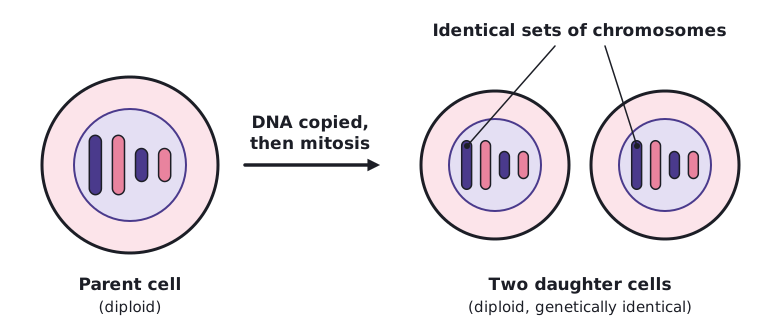
In mitosis, a diploid cell divides to produce two cells (daughter cells). Each daughter cell has an identical set of chromosomes to the parent cell, so the two cells are genetically identical to the parent and to each other.
The DNA is copied before the cell divides, and the copies are shared equally between the two daughter cells. So each daughter cell is also diploid. In humans each daughter cell has 46 chromosomes.
- Mitosis
- Division of a diploid cell to produce two cells that contain identical sets of chromosomes.
- Diploid
- A cell with two sets of chromosomes in its nucleus.
- Genetically identical
- Having exactly the same genetic information (the same DNA).
 (opens full size in a new tab)
Exam tip:
To describe the result of mitosis, give the key points: two cells, identical sets of chromosomes to the parent cell, genetically identical. The stages of mitosis are not required.