
Temperature, pH and enzyme activitySpec 2.11, 2.13
In short
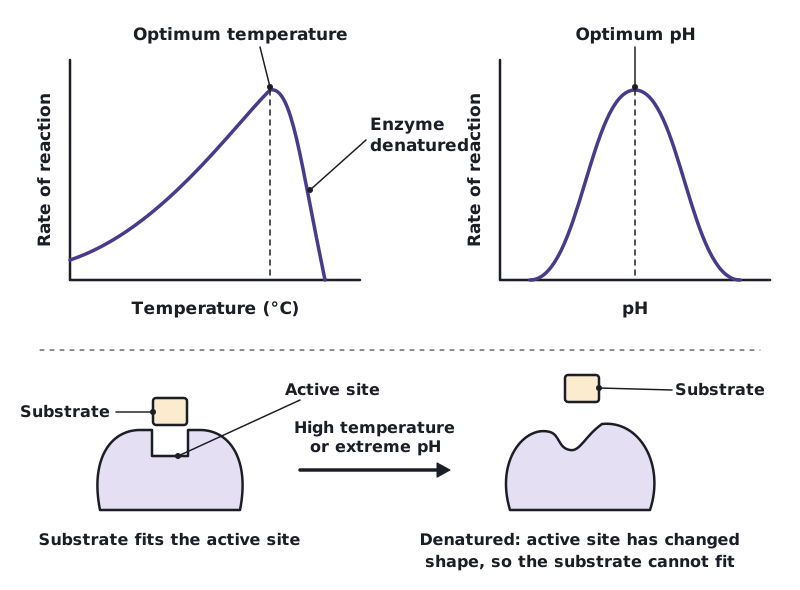
Enzymes work fastest at their optimum temperature and optimum pH. Raising the temperature increases collisions between enzyme and substrate, so the rate rises, but above the optimum the active site changes shape, the substrate no longer fits and the enzyme is denatured. Extreme pH also denatures enzymes. Many human enzymes work best at about 37 °C.
Temperature
As temperature increases, the particles move faster and have more kinetic energy. Enzyme and substrate collide more often, so the rate of reaction increases. The rate is highest at the optimum temperature, which is around 37 °C for many human enzymes.
Above the optimum temperature, the enzyme's structure is damaged and the shape of the active site changes. The substrate no longer fits, so the enzyme is denatured and the rate falls quickly towards zero. Denaturing is permanent.
pH
Each enzyme has an optimum pH where it works fastest. If the pH is higher or lower than the optimum, the shape of the active site is altered, so the substrate fits less well and the rate decreases. At extreme pH the active site changes shape so much that the substrate cannot fit: the enzyme is denatured.
Different enzymes have different optimum pH values. For example, amylase in the mouth works best at about pH 7 (neutral), while pepsin, a protease in the acidic stomach, works best at about pH 2.
| Factor | Below the optimum | At the optimum | Above the optimum |
|---|---|---|---|
| Temperature | Rate increases as particles collide more often | Highest rate | Active site changes shape, enzyme denatured, rate falls |
| pH | Rate decreases as pH moves away from the optimum; denatured at extreme pH | Highest rate | Rate decreases as pH moves away from the optimum; denatured at extreme pH |
 (opens full size in a new tab)
When a graph falls after a peak, always give the reason: the active site has changed shape and the enzyme has been denatured. Do not say the enzyme has been 'killed'. Enzymes are not alive.
Written and checked against the Edexcel IGCSE Science Double Award (4SD0) specification · Updated October 2026