
Book a tutor

Water pollution by sewage

Ecology and the environment · Human influences on the environment · note 4 of 5

Water pollution by sewageSpec 4.16

In short

Untreated sewage pollutes rivers and lakes because it contains organic matter, pathogens and mineral ions. Decomposers feed on the organic matter and use up the dissolved oxygen in aerobic respiration, so fish and other aquatic animals die and biodiversity falls. Pathogens in sewage spread diseases such as cholera and typhoid, and its nitrates and phosphates can cause eutrophication.

Sewage is waste water from homes and industry. If it is released into rivers or lakes without proper treatment, it causes pollution with several biological consequences.

  • Sewage contains a lot of organic matter. Bacteria and other decomposers feed on it and respire aerobically, so they use up the dissolved oxygen in the water.
  • As the oxygen level falls, fish and other aquatic animals that need oxygen die. Only organisms that tolerate low oxygen survive, so biodiversity falls.
  • Sewage contains pathogens (disease-causing microorganisms). People who drink the water or use it for washing food can catch diseases, such as cholera and typhoid.
  • Sewage also contains nitrates and phosphates. These act as fertiliser for algae and can lead to eutrophication.
  1. Untreated sewage enters the river.
  2. Decomposers multiply, feeding on the organic matter.
  3. The decomposers use up oxygen in aerobic respiration.
  4. The oxygen concentration of the water falls.
  5. Fish and other animals die, so the food web is disrupted.
Exam tip:

The key link is: more decomposers, so more oxygen used, so less oxygen for fish. Do not just say the sewage poisons the fish.
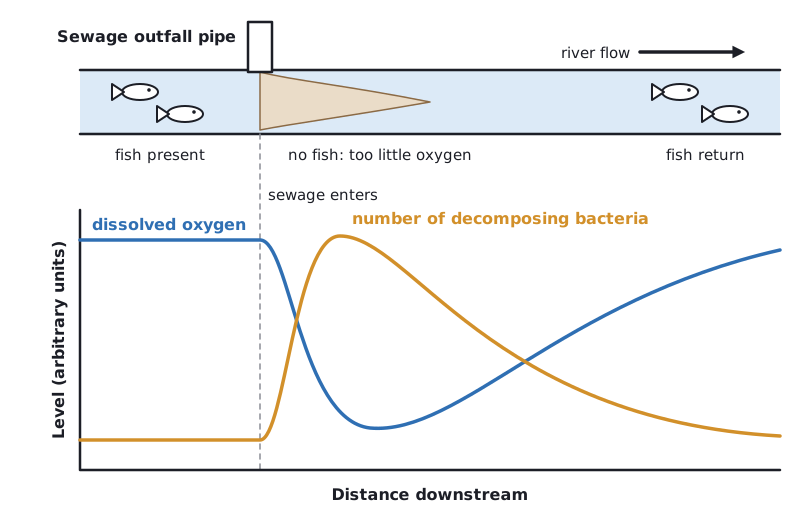
A sewage outfall pipe discharging into a river, with fish present upstream, no fish just downstream and fish returning further downstream; below, a graph against distance downstream shows dissolved oxygen falling sharply after the pipe then slowly recovering, while the number of decomposing bacteria rises sharply then falls. (opens full size in a new tab)
Decomposers feeding on the sewage use up the dissolved oxygen, so fish cannot survive just downstream.

Written and checked against the Edexcel IGCSE Science Double Award (4SD0) specification · Updated October 2026

Frequently asked questions

What is eutrophication and what causes it?

Eutrophication happens when too many mineral ions, such as nitrates and phosphates from fertilisers, are leached into lakes and rivers. Algae grow rapidly and block light, so plants below die. Decomposing bacteria feed on the dead material and use up the oxygen in aerobic respiration, so fish and other animals die.

How does the enhanced greenhouse effect cause global warming?

The Earth gives out infrared radiation, and greenhouse gases absorb some of it and radiate it back towards the Earth. Human activities, such as burning fossil fuels, increase these gases, so more infrared radiation is trapped. The average surface temperature rises, which is global warming, causing rising sea levels and more extreme weather.

How does carbon monoxide affect the body?

Carbon monoxide combines with haemoglobin in red blood cells much more strongly than oxygen does. Haemoglobin combined with carbon monoxide cannot carry oxygen, so less oxygen reaches the tissues and cells cannot respire aerobically enough. This causes headaches, dizziness and fainting, and a high dose can cause death.

All 4 questions on Human influences on the environment