
Practical: conditions for germinationSpec 3.5
In short
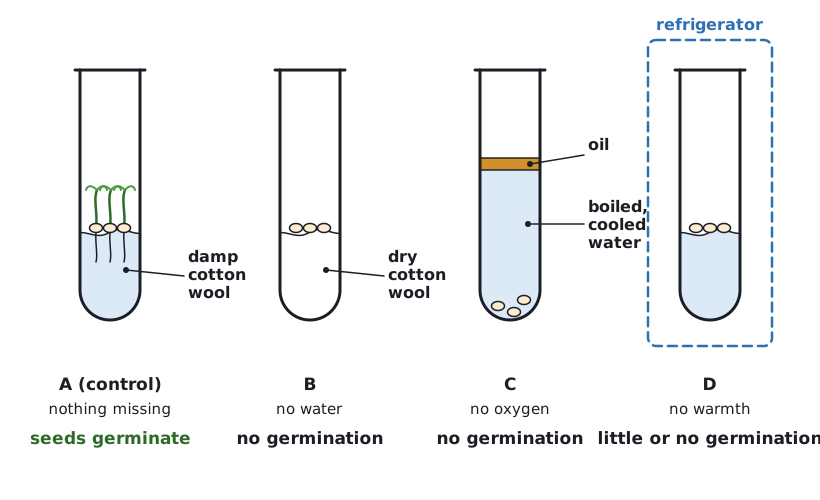
Seeds need water, oxygen for respiration and a suitable temperature to germinate. This practical changes one condition at a time: a control tube has damp cotton wool at room temperature, while other tubes lack water, oxygen (boiled water under oil) or warmth (a refrigerator). All tubes are kept dark, and only the control seeds germinate.
Seeds need three things to germinate: water, oxygen (for respiration) and a suitable temperature (warmth, so that enzymes work). They do not need light or soil to start germinating.
Investigate the conditions needed for seed germination. Use identical seeds (such as cress or mustard) in four labelled test tubes or Petri dishes.
- Tube A (control): damp cotton wool, seeds on top, left at room temperature. This has water, oxygen and warmth.
- Tube B (no water): dry cotton wool, seeds on top, left at room temperature.
- Tube C (no oxygen): seeds covered with boiled, cooled water with a thin layer of oil on top, left at room temperature. Boiling removes dissolved oxygen and the oil stops more entering.
- Tube D (cold): damp cotton wool, seeds on top, placed in a refrigerator.
- Keep tubes A, B and C in a dark cupboard at room temperature, because the inside of a refrigerator is dark. This way light is the same for all four tubes.
- Leave all tubes for several days and count how many seeds have germinated in each (a root or shoot is visible).
 (opens full size in a new tab)
| Tube | Condition missing | Result |
|---|---|---|
| A | None (control) | Seeds germinate |
| B | Water | No germination |
| C | Oxygen | No germination |
| D | Warmth | No germination or very little |
- Independent variable: the condition being changed (water, oxygen or temperature), one at a time.
- Dependent variable: the number (or percentage) of seeds that germinate.
- Control variables: same type and number of seeds, same age of seeds, same amount of cotton wool, same time, and the same light (all in the dark).
- Safety: take care when boiling water and let it cool before adding the seeds, wash your hands after handling seeds (some are treated with chemicals), do not eat the seeds, and mop up any spills.
Change only one variable at a time. Tube A is the control, so you can say that the lack of one condition is the reason the seeds fail to germinate.
Written and checked against the Edexcel IGCSE Science Double Award (4SD0) specification · Updated October 2026