
Oestrogen, progesterone and the menstrual cycleSpec 3.9
In short
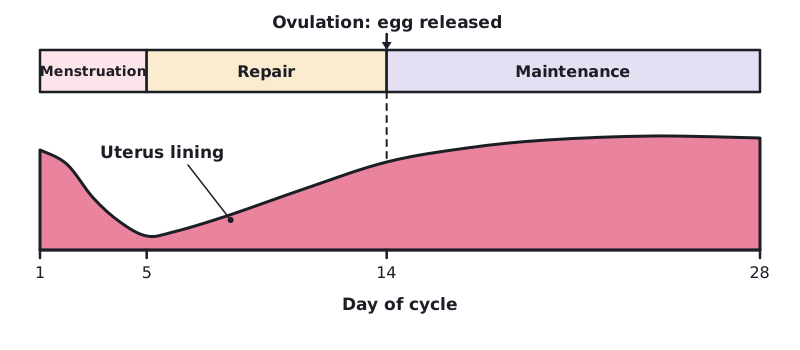
The menstrual cycle is a series of changes that repeats about every 28 days. Menstruation happens on days 1 to 5, the uterus lining is repaired and thickens until day 14, ovulation happens around day 14, and the lining is maintained. Oestrogen causes the repair and growth of the lining, and progesterone maintains it.
The menstrual cycle is a series of changes in a woman that repeats about every 28 days. Each cycle, an egg is released from an ovary and the lining of the uterus is prepared in case the egg is fertilised.
| Stage | Days | What happens |
|---|---|---|
| Menstruation | 1 to 5 | The lining of the uterus breaks down and is lost through the vagina with blood |
| Repair | 5 to 14 | The uterus lining is repaired and thickens again |
| Ovulation | Around 14 | An egg is released from an ovary |
| Maintenance | 14 to 28 | The lining stays thick, ready for a fertilised egg. If there is no pregnancy it breaks down and the cycle starts again |
The roles of two hormones
- Oestrogen is made in the ovaries. It causes the repair and growth of the uterus lining.
- Progesterone is made in the ovaries. It maintains the uterus lining.
If the egg is not fertilised, the level of progesterone falls. The lining is then no longer maintained, so it breaks down and menstruation begins.
When you read a hormone graph, say which day the change happens on and whether the level rises, falls or peaks. Use figures from the axes.
 (opens full size in a new tab)
Written and checked against the Edexcel IGCSE Science Double Award (4SD0) specification · Updated October 2026