

Root hair cellsSpec 6.7
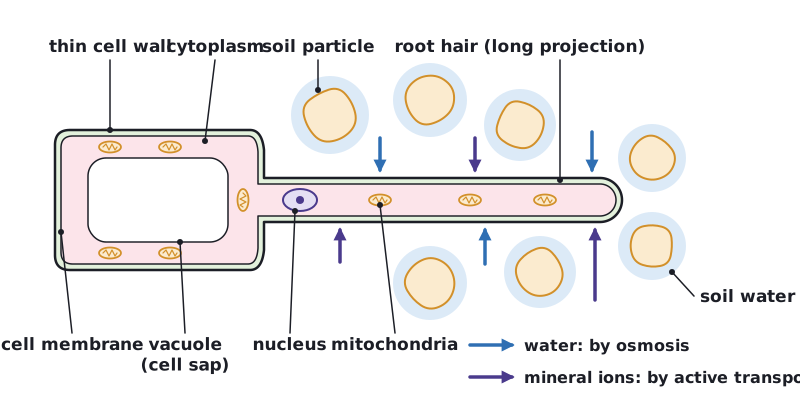
Root hair cells are found near the tips of roots. They take in water and mineral ions from the soil. Their structure is adapted for this job.
| Adaptation | How it helps |
|---|---|
| A long, thin projection (the root hair) | Gives a large surface area for absorbing water and mineral ions |
| A thin cell wall | A short distance for water and mineral ions to cross |
| Many mitochondria | Release energy by respiration for the active transport of mineral ions into the cell |
| Cell sap more concentrated than the soil water | Water moves into the cell by osmosis |
Mineral ions, such as nitrate ions, are usually at a lower concentration in the soil water than inside the cell. They are taken in by active transport, which needs energy from respiration.
 Tap to enlarge
Xylem and phloemSpec 6.8
Xylem and phloem are the two transport tissues in a plant. They run together through the roots, stem and leaves.
Xylem
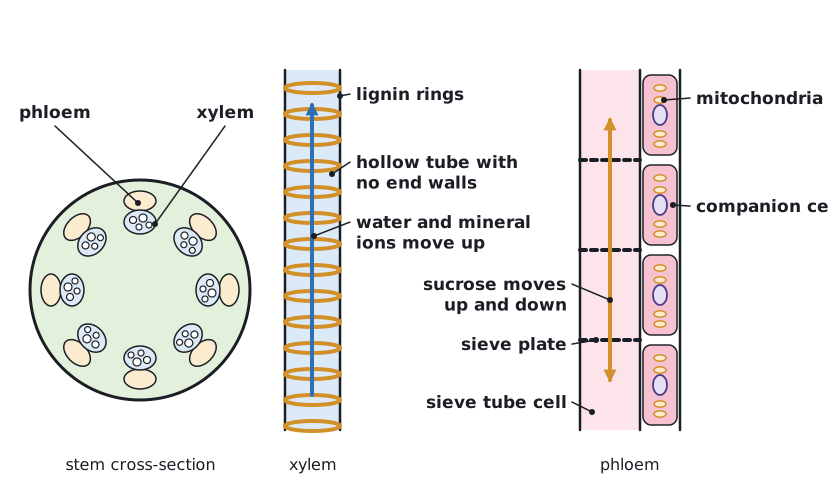
The xylem carries water and mineral ions from the roots to the rest of the plant. It is made of lignified dead cells.
- The cells are dead, with no cytoplasm or nucleus, and the end walls between them have broken down, so they form a continuous hollow tube. Water can flow through easily.
- The walls are strengthened with lignin, which is strong and waterproof. This stops the tubes from collapsing and supports the plant.
Phloem
The phloem carries sucrose around the plant. It is made of living cells that use energy to transport sucrose.
- Sieve tube cells are joined end to end. The end walls have holes (sieve plates), so dissolved sucrose can pass from cell to cell.
- Companion cells are next to the sieve tube cells. They have many mitochondria to release the energy that is needed for the transport of sucrose.
| Xylem | Phloem | |
|---|---|---|
| Substances carried | Water and mineral ions | Sucrose (dissolved in water) |
| Cells | Dead | Living |
| Cell walls | Thickened with lignin | Cellulose, with holes in the end walls (sieve plates) |
| Energy needed for transport | No | Yes |
 Tap to enlarge
Transpiration and stomataSpec 6.9
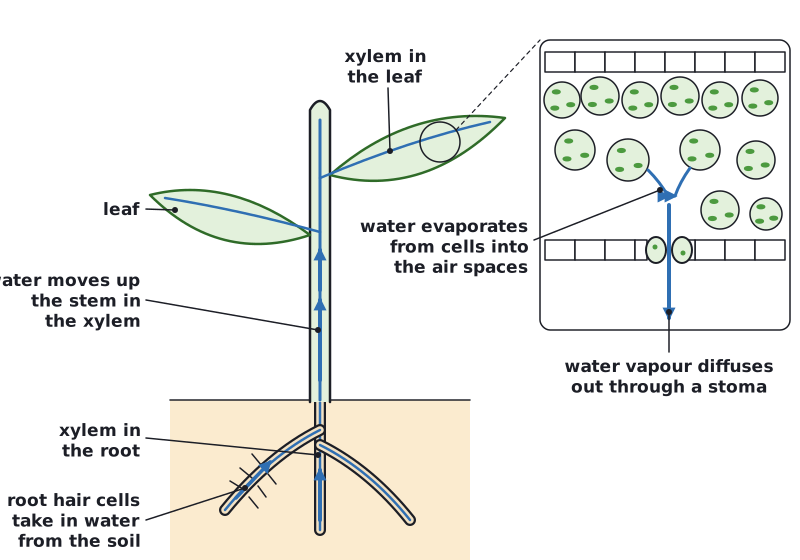
Transpiration is the loss of water vapour from a plant, mainly through the stomata in the leaves. It pulls a continuous stream of water, called the transpiration stream, through the plant. This is how water and mineral ions are transported from the roots to the leaves.
- Water is absorbed from the soil by the root hair cells.
- Water and dissolved mineral ions move up through the xylem to the leaves.
- Water evaporates from the surface of the cells inside the leaf, into the air spaces.
- Water vapour diffuses out of the leaf through the stomata, into the air.
 Tap to enlarge
Stomata
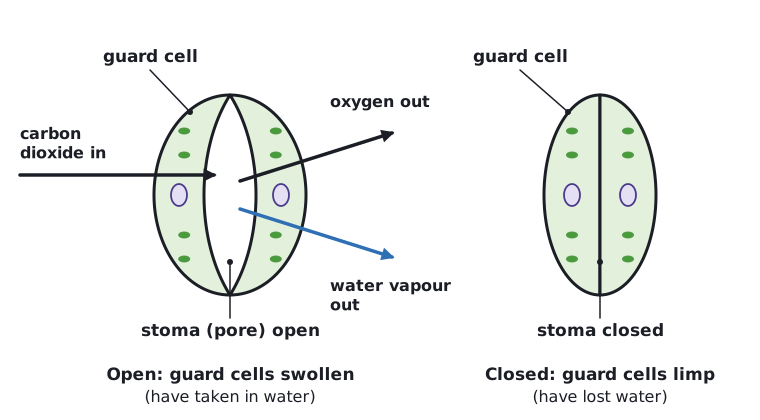
Stomata are tiny pores, found mainly on the underside of a leaf. Each stoma is surrounded by two guard cells which control whether the stoma is open or closed.
- Open stomata let carbon dioxide diffuse into the leaf for photosynthesis, and let oxygen and water vapour diffuse out.
- When the guard cells take in water they swell and the stoma opens.
- When the guard cells lose water they become limp and the stoma closes. This reduces the amount of water lost by transpiration, for example when the plant is short of water.
 Tap to enlarge
TranslocationSpec 6.10
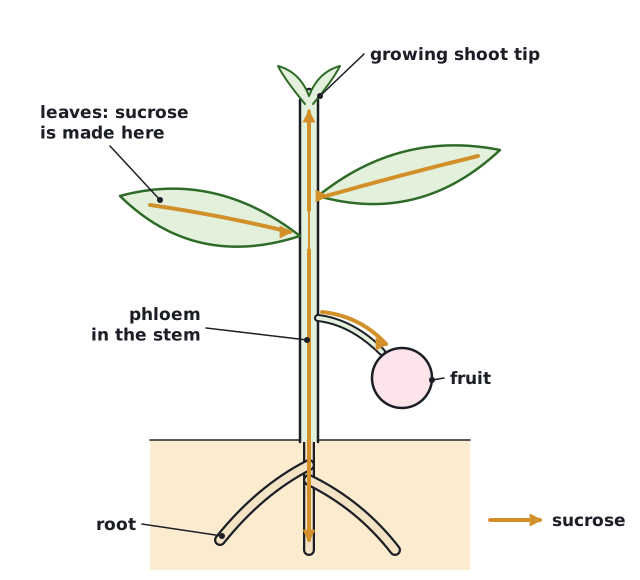
Translocation is the transport of sucrose around the plant. Sucrose is made from the glucose produced in photosynthesis, and it is carried dissolved in water in the phloem.
- Sucrose moves from the leaves, where it is made, to the parts of the plant that use it or store it, such as growing shoot tips, roots, flowers and fruits.
- It can move up and down the plant, depending on where it is needed.
- Translocation needs energy, which is released by respiration in the living cells of the phloem.
 Tap to enlarge
Quick check
Give two adaptations of a root hair cell.
Show answer
Any two of: a long, thin projection for a large surface area; many mitochondria for active transport; a thin cell wall.
Why is xylem made of lignified dead cells?
Show answer
Dead cells with no end walls form a continuous hollow tube for water, and lignin strengthens the walls.
What is transpiration?
Show answer
The loss of water vapour from the leaves, which pulls water through the plant.
What is translocation?
Show answer
The transport of sucrose around the plant in the phloem.